2026 Buyer's Guide: Selecting the Ideal Heavy Equipment Attachment
Master heavy equipment attachment selection. Learn hydraulic flow matching, coupler types, and 2026 pricing for excavators and wheel loaders.
The Hydraulic Flow & Pressure Matrix
Selecting a heavy equipment attachment requires more than verifying the pin diameter and stick width. In 2026, with modern high-flow hydraulic systems and advanced electronics, a mismatched attachment will not only underperform but actively destroy your carrier's hydraulic pump. The core metric for compatibility is the auxiliary hydraulic flow (GPM) and system pressure (PSI).
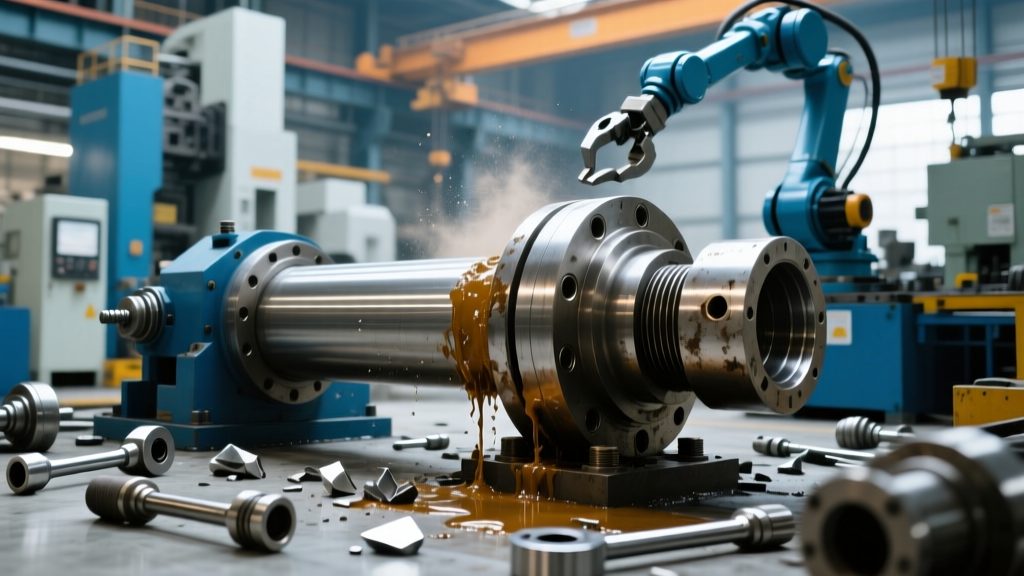
Running a high-flow attachment on a standard-flow carrier causes the relief valve to bypass continuously, generating excessive heat that degrades the hydraulic fluid and destroys pump seals. Conversely, running a low-flow attachment on a high-flow circuit without a proper flow restrictor will over-speed the attachment's internal motor, leading to catastrophic mechanical failure.
| Carrier Class | Weight Range | Aux Flow (GPM) | Max Pressure (PSI) | Ideal Attachment Match |
|---|---|---|---|---|
| Mini Excavator | 3 - 5 Tons | 15 - 25 | 3,000 | Hydraulic Breakers (300-500 lb), Augers |
| Mid-Size Excavator | 14 - 20 Tons | 40 - 70 | 4,500 | Tiltrotators, Grapples, Medium Hammers |
| Large Excavator | 30 - 40 Tons | 90 - 150 | 5,000+ | Heavy Hammers, Shears, Pulverizers |
Coupler Configurations: Pin-On vs. Hydraulic Quick Attach
The interface between your carrier's stick and the heavy equipment attachment dictates your daily operational efficiency. While manual pin-on configurations remain the baseline for dedicated, single-task machines, hydraulic quick couplers (HQC) are the standard for multi-tool fleets.
Hydraulic Quick Couplers (e.g., Werk-Brau V-Lock, Miller Pro-Pin)
- Efficiency: Operators can switch from a grading bucket to a hydraulic thumb in under 60 seconds without leaving the cab.
- Safety: Modern 2026 HQC systems utilize dual-locking mechanisms and front-pin lock sensors that prevent accidental disengagement if hydraulic pressure drops.
- ROI: Increases attachment utilization rates by up to 35% on job sites requiring diverse tasks.
Manual Pin-On Configurations
- Weight Penalty: Eliminates the 400-800 lb weight penalty of an HQC, allowing you to lift heavier payloads or use slightly larger buckets on the same carrier.
- Cost: Saves $8,000 to $14,000 in initial capital expenditure per machine.
- Durability: Zero internal hydraulic cylinders or springs to fail in high-debris environments like demolition or quarrying.
High-ROI Attachment Categories & 2026 Pricing Realities
When budgeting for fleet expansion, buyers must look beyond the sticker price of the attachment and factor in the necessary carrier modifications. Here is a breakdown of the most common high-ROI attachments and their current market realities.
1. Tiltrotators (e.g., Engcon EC226, Steelwrist X18)
Tiltrotators allow 360-degree continuous rotation and up to 45 degrees of tilt, effectively turning a standard excavator into a precision grading and trenching tool. For a 20-ton carrier like the John Deere 210G or Cat 320, an Engcon EC226 is the industry benchmark.
- Base Price: $38,000 - $44,000 (including top and bottom brackets).
- Hidden Cost: Requires a dedicated case drain line (see warning below) and a proportional control joystick upgrade in the cab ($2,500 - $4,000).
- Flow Requirement: 30 - 45 GPM at 4,000 PSI.
2. Hydraulic Hammers (e.g., Cat H145, Atlas Copco MB 1700)
For concrete demolition and trenching in bedrock, hydraulic hammers are indispensable. The Cat H145 is engineered for 20-30 ton carriers, delivering 1,500 to 2,200 blows per minute.
- Base Price: $24,000 - $29,000.
- Maintenance Reality: Nitrogen gas-assisted models require bi-annual nitrogen recharges. Failure to maintain the correct gas charge forces the hydraulic piston to do all the work, increasing heat and wear.
- Relief Valve Tuning: The carrier's auxiliary relief valve must be set exactly 500 PSI above the hammer's rated operating pressure. Setting it too low robs the hammer of striking power; setting it too high causes the hydraulic oil to overheat.
Expert Insight: According to Caterpillar's attachment engineering guidelines, matching the tool diameter to the carrier's lift capacity is critical. Oversizing a hammer to save time will cause the carrier's front linkage to crack under the recoil stress, leading to structural repairs that far exceed the cost of the attachment itself.
The Case Drain Catastrophe: A Warning for Motor-Driven Attachments
CRITICAL WARNING: Tiltrotator & Auger Motor Blowouts
Any heavy equipment attachment that utilizes a hydraulic motor (tiltrotators, augers, brush cutters) requires a case drain line. This is a third, low-pressure hydraulic hose that routes internal motor leakage directly back to the hydraulic tank.
If your machine only has two auxiliary hoses (pressure and return), the return line back-pressure (often 300-500 PSI) will be forced against the motor's internal shaft seal. The shaft seal will blow out in less than 40 hours of operation, resulting in a $6,000+ motor rebuild and severe hydraulic fluid loss on the job site. Always verify your carrier has a third auxiliary circuit before purchasing a motorized attachment.
Auxiliary Hose Routing & SAE Standards
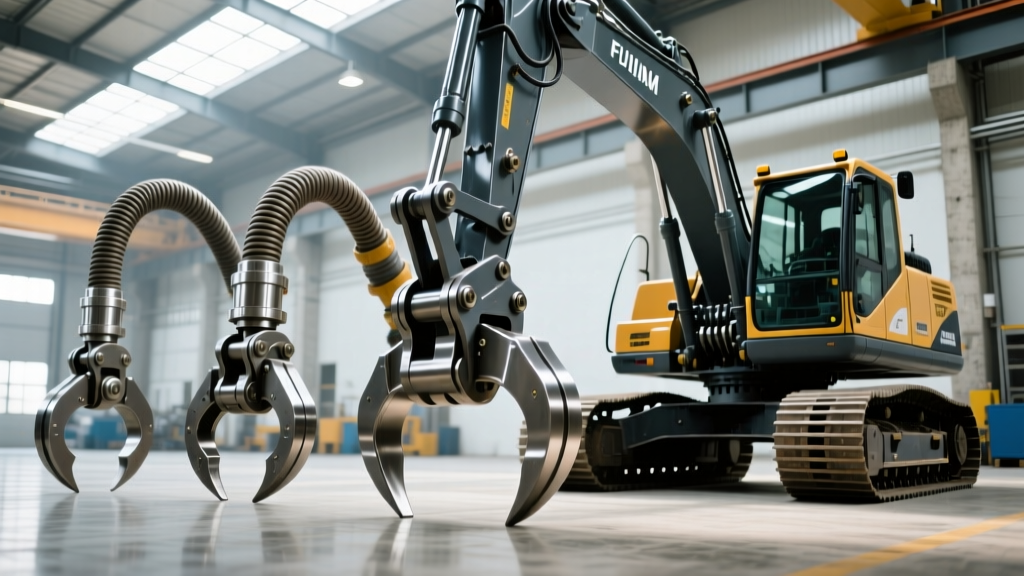
The hoses connecting your carrier to the attachment are the most vulnerable point of failure. Standard rubber hoses degrade rapidly under UV exposure and abrasive job site conditions. When replacing or spec'ing auxiliary lines for a new heavy equipment attachment, demand hoses that meet the SAE 100R12 standard.
- SAE 100R12: Features a four-wire spiral reinforcement. It handles up to 6,000 PSI and resists high-impulse pressure spikes common when an operator abruptly stops a heavy grapple or hammer.
- Routing Best Practice: Hoses must be routed inside the stick or protected by ultra-high-molecular-weight (UHMW) polyethylene wear pads. Exposed hoses on the outside of the boom will be severed by rebar or concrete debris within weeks.
Safety & Compliance in Quick Coupler Operations
The integration of quick couplers has introduced severe safety hazards if operators bypass safety protocols. Accidental detachment of heavy equipment attachments from heights has resulted in numerous fatal crushing incidents.
The Occupational Safety and Health Administration (OSHA) explicitly mandates that workers must never be in the swing radius or under a suspended attachment. Furthermore, the Association of Equipment Manufacturers (AEM) provides stringent guidelines on quick coupler maintenance, emphasizing that operators must perform a visual 'curl test'—curling the attachment inward against the stick to verify the secondary lock is engaged before lifting any load.
2026 Electronic Safety Interlocks
To mitigate human error, modern 2026 carrier models now feature electronic interlocks. If the quick coupler's front-pin lock sensor detects that the attachment is not fully seated, the machine's ECU will restrict the boom's lifting capacity and trigger an audible cab alarm. When purchasing a used carrier for attachment work, verify the functionality of these sensors; bypassing them is a severe OSHA violation.
Summary: The Buyer's Decision Checklist
Before signing a purchase order for your next heavy equipment attachment, run it through this final verification matrix:
- Flow Match: Does the attachment's required GPM fall within the carrier's adjustable auxiliary flow range?
- Pressure Match: Can the carrier's relief valve be tuned to the attachment's exact specification (+500 PSI buffer)?
- Case Drain: If the attachment has a hydraulic motor, does the carrier have a dedicated, zero-pressure case drain port?
- Weight Capacity: Does the combined weight of the quick coupler, attachment, and maximum payload exceed the carrier's lift chart at maximum reach?
- Pin Geometry: Are the stick width, pin diameter, and pin centers identical to the attachment's bracket specifications?
By prioritizing hydraulic compatibility and structural geometry over brand loyalty, fleet managers can maximize attachment lifespan, protect carrier hydraulics, and ensure job site safety.