Next-Gen Tech in Diesel Engine & Heavy Equipment Repair
Discover how AI diagnostics, AR overlays, and IoT sensors are revolutionizing diesel engine and heavy equipment repair in modern fleet maintenance.
The modern repair bay looks vastly different than it did a decade ago. As Tier 4 Final and Stage V emissions standards forced extreme complexity onto powertrains, the traditional 'turn wrenches until it runs' approach became financially unsustainable. Today, advanced diesel engine & heavy equipment repair relies on a convergence of edge computing, augmented reality, and advanced tribology to diagnose faults before they result in catastrophic core failures.
For fleet managers and independent repair shops, adopting these technologies is no longer an optional upgrade—it is a baseline requirement to maintain bay turnover rates and protect profit margins against the rising cost of OEM replacement components.
The Sensor Revolution: Edge AI and SAE J1939 Telematics
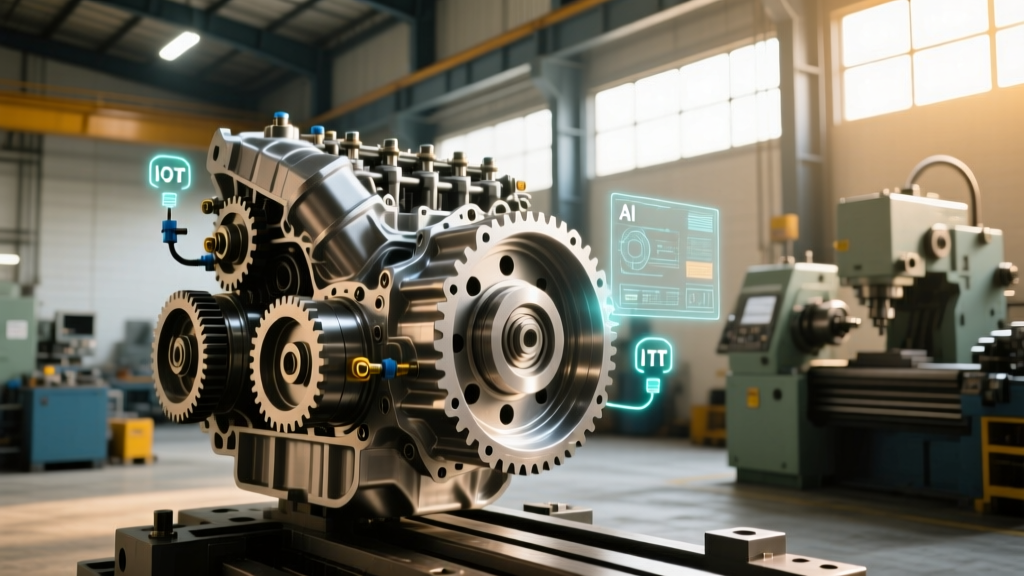
Historically, telematics simply relayed diagnostic trouble codes (DTCs) over cellular networks to a cloud server. In 2026, the paradigm has shifted to Edge AI. Modern Engine Control Modules (ECMs) now feature localized neural processing units that analyze SAE J1939 CAN bus data in real-time, directly on the machine.
Acoustic and Vibration Monitoring
Piezoelectric vibration sensors mounted on the engine block and transmission housing now sample at frequencies up to 50 kHz. Instead of waiting for a mechanic to use a handheld analyzer, the Edge AI continuously monitors for specific harmonic signatures. For example, a failing Bosch CP4.2 high-pressure fuel pump generates a distinct micro-cavitation signature between 12 kHz and 18 kHz before internal lubrication fails. Detecting this signature allows shops to replace the pump for $1,800 before it shatters and sends metal shards into the piezo injectors, which would result in a $14,000+ fuel system overhaul.
⚠️ Critical Alert: DEF CrystallizationDiesel Exhaust Fluid (DEF) dosing modules are highly susceptible to urea crystallization if the injector tip temperature drops below 120°C during low-load cycles. Modern thermal imaging sensors integrated into the aftertreatment housing now automatically trigger active purge cycles and adjust exhaust gas temperatures to melt crystals (which melt at 132°C) before they restrict flow and trigger derate codes.
Augmented Reality (AR) in the Rebuild Bay
Rebuilding a heavy-duty diesel engine like the Cummins X15 or Caterpillar C13 ACERT requires strict adherence to complex torque sequences and clearance tolerances. Augmented Reality headsets, specifically the Microsoft HoloLens 2 paired with heavy-machinery software suites, have reduced rebuild errors by projecting 3D overlays directly onto the physical engine block.
- Torque Sequence Projection: AR highlights the exact cylinder head bolt to torque next, displaying the required 120 Nm + 90° + 90° turn specification in the technician's field of vision.
- Wiring Harness Routing: For complex electrical diagnostics, AR overlays the OEM wiring schematic directly onto the chassis, highlighting the exact path and connector pinouts for the aftertreatment harness.
- Remote Expert Collaboration: Senior master technicians can see exactly what the junior tech sees, drawing digital circles around specific components like the EGR valve actuator to guide disassembly.
Technology ROI: Traditional vs. Tech-Enabled Repair Shops
Upgrading a facility requires significant capital expenditure, but the return on investment is realized through drastically reduced misdiagnosis rates and faster bay turnover. The following matrix compares operational metrics between a traditional reactive shop and a tech-enabled facility utilizing OEM condition monitoring and predictive analytics.
| Metric | Traditional Reactive Shop | Tech-Enabled Predictive Shop |
|---|---|---|
| Average Diagnostic Time (Engine Derate) | 4.5 - 6.0 Hours | 0.5 - 1.5 Hours |
| Misdiagnosis / Comeback Rate | 18% - 22% | < 4% |
| Parts Procurement Lead Time | 24 - 72 Hours (Post-Diagnosis) | 0 Hours (Pre-staged via IoT alerts) |
| Bay Turnover (Major Powertrain) | 3.5 Days | 1.8 Days |
Advanced Fluid Analytics and Tribology
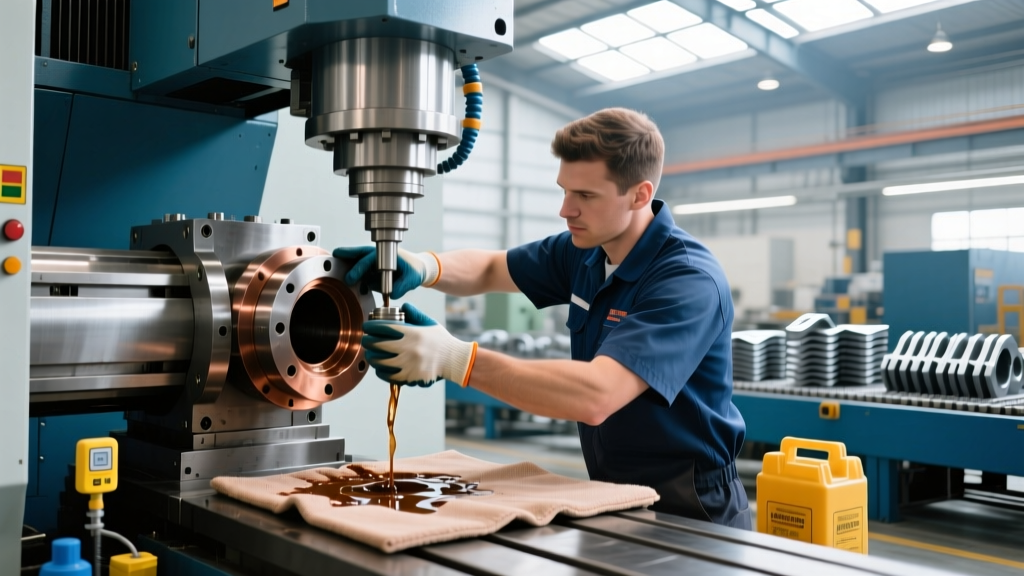
Routine oil sampling has evolved from basic spectrometry to advanced quantitative debris analysis. Modern on-site fluid analyzers utilize laser-induced breakdown spectroscopy (LIBS) to provide immediate, highly accurate elemental readings.
'By tracking the exact ratio of iron (Fe) to chromium (Cr) in the lubricant, we can determine if the wear is originating from the cylinder liners or the piston rings, allowing us to schedule a top-end overhaul before a piston seizes and cracks the block.' — Lead Tribologist, Heavy Duty Fleet Services
For coolant systems, inline refractometers continuously monitor the glycol concentration and nitrite depletion rates in Extended Life Coolants (ELC). If nitrite levels drop below 300 ppm, the system automatically alerts the maintenance manager that the Supplemental Coolant Additive (SCA) filter needs replacement, preventing cavitation erosion on the wet sleeve cylinder liners.
Step-by-Step Tech-Enabled Troubleshooting: EGR Flow Faults
When a Tier 4 Final engine throws an SPN 7138 (EGR Valve Flow) fault, the diagnostic process is streamlined using integrated digital workflows:
- Remote ECM Snapshot: The telematics system automatically captures a 60-second data log surrounding the fault event, recording EGR delta-P sensor voltage, intake manifold pressure, and exhaust backpressure.
- AI Fault Tree Analysis: The diagnostic software cross-references the snapshot against 50,000+ historical failures, assigning a 92% probability to a soot-clogged EGR cooler rather than a failed valve actuator.
- Thermal Verification: The technician uses a FLIR thermal imaging camera to scan the EGR cooler. A temperature differential of less than 15°C between the inlet and outlet confirms internal soot blockage restricting heat transfer.
- Automated Parts Ordering: The shop management system automatically generates a PO for the replacement EGR cooler and gasket kit, routing it from the nearest regional distributor.
Implementation Framework and Capital Costs
Transitioning to a tech-enabled repair model requires strategic capital allocation. According to Deloitte's research on smart factory implementations, phased rollouts yield the highest adoption rates among legacy technicians.
- Phase 1: Telematics Integration ($45 - $85 / month per asset): Activate OEM telematics and integrate the API into your CMMS (Computerized Maintenance Management System) to centralize fault code alerting.
- Phase 2: Fluid Analysis Automation ($12,000 - $18,000 initial setup): Install on-site LIBS oil analyzers and automated coolant refractometers to eliminate third-party lab turnaround times.
- Phase 3: AR and Advanced Diagnostics ($25,000+ per bay): Deploy AR headsets ($3,500 per unit plus $125/month software licensing) and high-end oscilloscopes capable of decoding high-speed CAN FD networks for advanced injector pulse-width analysis.
The Bottom Line for 2026
The shops that will dominate the heavy equipment repair sector are those that treat data as their most valuable tool. By leveraging edge AI, augmented reality, and advanced tribology, repair facilities can transition from reactive parts-changers to proactive reliability partners, securing higher margins and deeper loyalty from fleet operators.