How Much Do Heavy Equipment Operators Make vs. Mechanics?
Compare 2026 salaries for heavy equipment operators vs mechanics. Discover how machine control, telematics, and EV tech impact earning potential.
The Tech-Driven Divergence in Heavy Equipment Careers
The integration of semi-autonomous haulage systems, AI-driven telematics, and battery-electric drivetrains has fundamentally fractured the traditional heavy equipment career path. The question of how much does a heavy equipment operator make compared to the mechanics maintaining these advanced systems is no longer just about hours logged in the cab or under the chassis. In 2026, compensation is dictated by software proficiency, data management, and high-voltage diagnostics.
Historically, operators and mechanics shared a similar earning trajectory, with mechanics holding a slight edge due to the physical toll and specialized tooling required. Today, the proliferation of machine control and mobile diagnostic software has created distinct, highly lucrative sub-specialties within both roles. Understanding the technological shift is critical for professionals deciding which path offers the best return on investment for their specific aptitudes.
Core Thesis: The 2026 Earning Paradigm
Base salaries for both roles have stabilized, but technology-premium earnings have exploded. Operators who master 3D surface modeling and drone-to-machine workflows command a 20-30% premium over traditional joystick operators. Mechanics certified in high-voltage EV systems and proprietary OEM diagnostic software (like CAT ET or John Deere Service Advisor) are currently experiencing a severe labor shortage, pushing their top-end compensation past six figures.
The Operator's New Reality: From Joystick to Systems Manager
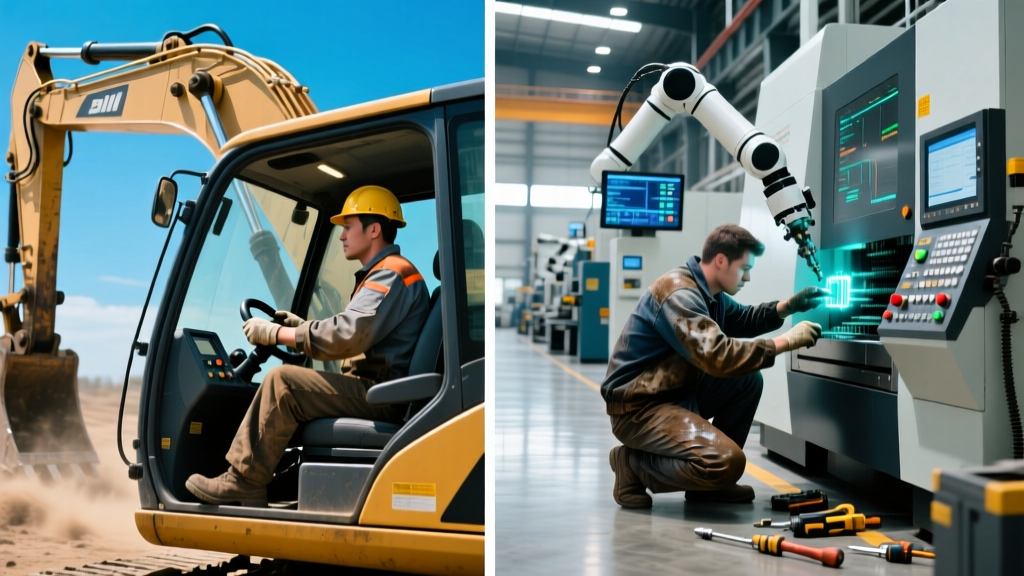
The modern earthmoving site relies on a continuous digital thread. Operators are no longer just moving dirt; they are executing complex digital models. The widespread adoption of platforms like Trimble Earthworks and Topcon X-53i has transformed the cab into a data-rich command center.
Drone-to-Machine Workflows
In 2026, the most highly compensated operators are those who can interface directly with site surveyors. Using drone photogrammetry software like Propeller or DroneDeploy, site data is captured, processed into 3D topographical surfaces, and pushed directly to the excavator or dozer's cab display via cloud connectivity. Operators who can verify GNSS base station coordinates, troubleshoot rover connectivity issues, and adjust machine control parameters on the fly are classified as Grade Technicians rather than standard operators.
- Standard Operator: Relies on physical stakes, laser levels, and basic 2D laser receivers. Executes repetitive trenching or grading.
- Tech-Enabled Operator: Manages 3D machine control models, performs daily GNSS calibrations, and optimizes fuel consumption via semi-autonomous features (e.g., Cat Assist or Komatsu intelligent Machine Control).
The Mechanic's Tech Overhaul: Wrenches, Code, and High Voltage
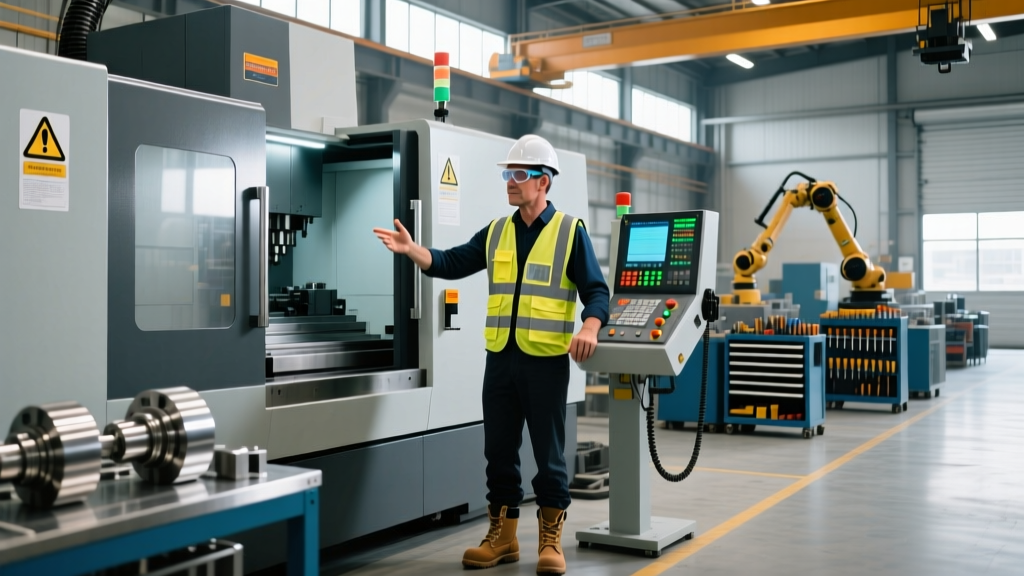
While operators manage the spatial data, mechanics are now managing the machine's internal nervous system. The days of purely mechanical diesel repair are fading. According to the Bureau of Labor Statistics, the demand for technicians who can troubleshoot electronic control modules (ECMs) and telematics hardware is vastly outpacing the supply of traditional diesel mechanics.
Telematics and Predictive Maintenance
Systems like John Deere JDLink and Cat Product Link stream thousands of data points per minute—hydraulic pressures, DEF consumption rates, and particulate filter temperatures. The modern heavy equipment mechanic uses this telematics data to perform predictive maintenance, replacing components before catastrophic failure occurs. This requires proficiency in interpreting complex data dashboards and writing custom fault-code reports.
The High-Voltage EV Transition
With the aggressive rollout of battery-electric compact and mid-sized equipment (such as the Volvo ECR25 Electric and various battery-powered telehandlers), mechanics must now hold NFPA 70E high-voltage safety certifications. Diagnosing a lithium-ion battery thermal management fault or isolating a 400V+ DC drivetrain requires an entirely different skill set—and commands a significantly higher hourly rate—than rebuilding a mechanical transmission.
2026 Salary & Tech Stack Comparison Matrix
When evaluating how much heavy equipment operators make versus their mechanic counterparts, the data reveals a clear premium for technological specialization in both camps. The following matrix outlines current 2026 market compensation based on tech proficiency.
| Career Path & Tech Tier | Core Tech Stack Required | 2026 Base Salary Range | Top-Tier Earning Potential (w/ OT) |
|---|---|---|---|
| Traditional Operator | 2D Lasers, Basic GPS, Manual Grade Checking | $55,000 - $72,000 | $85,000 |
| Grade Tech / Machine Control Operator | Trimble Earthworks, Topcon 3D, Drone Data Sync | $80,000 - $98,000 | $125,000+ |
| Traditional Diesel Mechanic | Mechanical Fuel Systems, Hydraulics, Powertrain | $60,000 - $80,000 | $95,000 |
| Advanced Diagnostic & EV Technician | CAT ET, JDLink, High-Voltage Isolation, CAN bus | $90,000 - $115,000 | $145,000+ |
Note: Salary data reflects national averages for the US market in 2026, factoring in prevailing wage projects and union scales where applicable. Source context aligned with BLS Construction Equipment Operator and Technician occupational outlooks.
Decision Framework: Which Path Fits Your Aptitude?
Choosing between the cab and the shop floor requires an honest assessment of how you interact with technology. Use this framework to determine your optimal career trajectory.
Choose the Operator Path If:
- You excel at spatial reasoning and can visualize 3D topographical models in real-time.
- You prefer managing workflows and data synchronization (e.g., cloud-to-machine model updates).
- You are comfortable taking ownership of site accuracy and are willing to learn basic surveying principles and drone data processing.
- You want a role where your tech skills directly impact daily project profitability through material savings and fuel efficiency.
Choose the Mechanic Path If:
- You possess a systems-level analytical mindset and enjoy tracing complex electrical or hydraulic faults through CAN bus networks.
- You are willing to invest in continuous OEM software training and high-voltage safety certifications.
- You prefer a controlled environment (or a highly equipped mobile service truck) over sitting in a cab for 10-hour shifts.
- You want recession-proof job security; as machines become more complex, the barrier to entry for repairs rises, severely limiting the labor pool and driving up your hourly leverage.
The ROI on Upskilling: Certifications That Move the Needle
Whether you choose to operate or repair, baseline skills only yield baseline pay. The true earning potential in 2026 is unlocked through specialized, vendor-agnostic, or OEM-specific certifications.
For Operators: The Machine Control Premium
Operators who invest time in mastering Trimble Business Center or Topcon MAGNET software can transition into Site Data Coordinator roles. These hybrid positions involve managing the digital models for an entire fleet of machines. Furthermore, understanding how to calibrate IMU (Inertial Measurement Unit) sensors on excavator booms ensures the machine control system maintains sub-millimeter accuracy, a skill that makes an operator indispensable on precision grading projects like highway overpasses or commercial foundations.
For Mechanics: The Electronic Systems Administrator (ESA)
Diesel mechanics who transition into ESA roles focus entirely on software flashes, ECM cloning, and telematics troubleshooting. Additionally, obtaining certifications in lithium-ion battery thermal management and high-voltage PPE protocols positions you at the forefront of the industry's shift toward electric compact equipment. Contractors are currently paying a 25% premium for mechanics who can safely isolate and diagnose 800V DC systems on emerging electric telehandlers and compact track loaders.
'The gap between a $30/hour mechanic and a $65/hour diagnostic technician isn't just about turning wrenches faster. It is about the ability to read a CAN bus data stream, identify a failing sensor before it throws a hard code, and reprogram the controller via a satellite link to the OEM server.' — Field Service Manager, National Heavy Equipment Dealership Network
Final Verdict: The Convergence of Dirt and Data
The debate over how much heavy equipment operators make versus mechanics is ultimately a reflection of how much value each role extracts from the machine's digital ecosystem. Operators who embrace machine control and drone data act as the tip of the spear, translating digital models into physical earthworks. Mechanics who master telematics and high-voltage diagnostics act as the shield, ensuring those complex systems remain operational in brutal environments. Both paths offer highly lucrative, tech-centric careers in 2026, provided you are willing to trade traditional manual labor for continuous digital education.