Heavy Equipment Machine Operator Careers: Renewables vs Traditional
Compare heavy equipment machine operator careers in renewable energy vs traditional construction. Discover 2026 salary data, fleet specs, and certifications.
The Core Divide: Traditional Dirt vs. Renewable Energy Sites
The transition toward grid-scale solar, onshore wind, and green hydrogen infrastructure has fundamentally altered the career trajectory for the modern heavy equipment machine operator. While traditional commercial and highway construction remains the backbone of the industry, the renewable energy sector offers a distinct alternative with different operational demands, machine scales, and compensation structures. Choosing between these two paths requires analyzing the day-to-day realities of the job site, the specific equipment fleets you will command, and the long-term stability of the sector.
Traditional heavy civil projects—such as highway expansions, commercial foundations, and municipal water treatment plants—operate on predictable, localized schedules. Operators typically work within a 50-mile radius of their home base, running standard earthmoving fleets. In contrast, renewable energy projects are inherently remote. A 500-megawatt solar array or a 150-turbine wind farm requires mobilizing to rural, often undeveloped terrain, necessitating extended travel, per diem living, and the operation of highly specialized, ultra-heavy machinery.
Key Operational Difference: Traditional earthmoving focuses on volume and speed (cubic yards per hour). Renewable energy site prep and erection focus on extreme precision and load management, particularly when handling multi-million-dollar turbine components or grading vast solar arrays to sub-inch GPS tolerances.Compensation Matrix: 2026 Salary & Benefits Comparison
Financial compensation is the primary driver for operators considering a pivot to renewables. According to the Bureau of Labor Statistics data for Operating Engineers, the national median pay hovers around $56,000 to $65,000 for general construction. However, renewable energy skews this data significantly upward due to hazard pay, specialized rigging requirements, and remote per diems.
| Career Path | 2026 Base Salary Range | Total Comp (w/ Per Diem & OT) | Travel Requirement |
|---|---|---|---|
| Traditional Commercial Earthmoving | $65,000 - $82,000 | $75,000 - $90,000 | Low (Local/Regional) |
| Heavy Civil / Highway | $70,000 - $95,000 | $85,000 - $110,000 | Medium (State-wide) |
| Utility-Scale Solar Grading | $72,000 - $88,000 | $90,000 - $105,000 | High (6-12 month deployments) |
| Wind Turbine Crane & Rigging | $95,000 - $125,000 | $130,000 - $165,000+ | Extreme (National travel) |
Wind turbine erection represents the absolute pinnacle of operator compensation. The U.S. Department of Energy's Energy and Employment Report consistently highlights wind and solar as the fastest-growing sectors for specialized construction labor. Operators who hold dual certifications in heavy crane operation and advanced rigging command massive premiums because a single dropped nacelle or blade can result in tens of millions of dollars in losses and severe site safety violations.
Machine Fleet Comparison: What You Will Actually Drive
The iron you operate dictates your daily experience. Traditional sites rely on standardized, high-production machines. Renewable sites require highly specialized, often custom-configured equipment.
Traditional Construction Fleet
- Excavators: Caterpillar 320 to 330 series; Volvo EC250. Standard trenching, foundation digging, and material loading.
- Dozers & Graders: Cat D6 or D8 dozers, 14M motor graders. Used for rough grading and road maintenance.
- Haul Trucks: Articulated dump trucks (ADTs) like the Bell B45E or Volvo A45G for short-distance material transport.
Renewable Energy Fleet
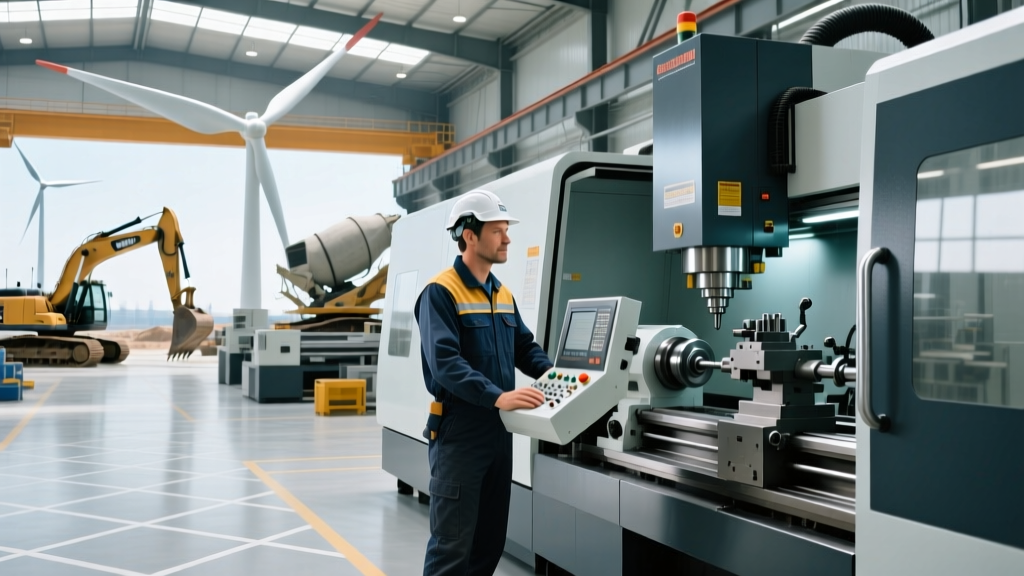
- Wind Erection Cranes: Liebherr LR 1300/3500 or the Manitowoc MLC300. These are massive lattice-boom crawler cranes specifically engineered with wind-turbine-specific boom configurations to hoist 100-ton nacelles to heights exceeding 120 meters. Operators must manage complex load charts that account for micro-wind shifts at extreme elevations.
- Solar GPS Dozers: John Deere 850L or Cat D6 equipped with Topcon iX3 or Trimble Earthworks 3D machine control. Solar arrays require grading tolerances of less than 0.1 feet over hundreds of acres to ensure optimal panel racking alignment. Operators spend less time looking out the window and more time managing digital elevation models on in-cab screens.
- Telehandlers & Forklifts: JCB Loadall or Manitou MT 1840 telehandlers with specialized rotating carriages for handling 80-foot fragile turbine blades on uneven, unpadded terrain.
"Operating a 750-ton crawler crane on a wind farm is nothing like running a 330 excavator on a commercial pad. On a commercial pad, a mistake means re-digging a trench. On a wind farm, a mistake during a blade lift in a 12-mph crosswind means catastrophic structural failure. The mental fatigue at the end of a 10-hour shift is entirely different."
Certification Alternatives: Mapping the Training Investment
Transitioning from traditional dirt work to renewables requires upgrading your certification portfolio. Standard OSHA 10/30 and basic NCCER credentials are insufficient for prime renewable contractors.
Traditional Path Certifications
- OSHA 30-Hour Construction: ~$150-$250, 4 days.
- CDL Class A: Required for local equipment transport. ~$5,000.
- State-Specific Hoisting Licenses: Varies by state, generally for smaller cranes and forklifts.
- Total Time Investment: 1-2 months.
Renewable Path Certifications
- NCCCO Mobile Crane Operator: National Commission for the Certification of Crane Operators. Requires rigorous written and practical exams. ~$500-$800 for testing, plus $3,000+ for prep courses.
- NCCCO Rigger Level II: Essential for turbine component lifts. ~$400.
- Wind Energy Safety (GWO): Global Wind Organisation Basic Safety Training (Working at Heights, Fire Awareness). ~$2,500.
- Total Time Investment: 4-6 months of dedicated study and travel to testing centers.
While the renewable certification path requires a higher upfront investment of roughly $6,000 to $9,000 and several months of preparation, the return on investment is typically realized within the first six months of employment on a wind erection crew due to the massive compensation premium.
Pros and Cons of the Renewable Energy Pivot
Evaluating the lifestyle and operational trade-offs is critical before submitting your resume to a renewable EPC (Engineering, Procurement, and Construction) contractor.
The Advantages
- Recession Resistance: Grid modernization and state-mandated renewable portfolio standards provide a multi-decade pipeline of funded projects, insulating operators from the boom-and-bust cycles of commercial real estate development.
- Technological Engagement: Operators who enjoy software, drone topography, and GPS machine control will find solar site prep highly engaging compared to repetitive trenching.
- Aggressive Wealth Building: With per diems, travel bonuses, and 60-hour work weeks, wind and solar operators can easily clear $140,000+ annually, allowing for rapid debt payoff or investment.
The Drawbacks
- Extreme Isolation: Wind farms are located in the most remote, wind-swept corridors of the country. You will spend 6 to 10 months a year living in extended-stay hotels or remote man-camps, far from family.
- Weather Delays & Downtime: Wind turbine erection is strictly governed by anemometer readings. If wind speeds exceed 18 mph at the hub height, the crane is grounded. This leads to days of sitting in a trailer waiting for weather windows, which can be mentally taxing and impact hourly pay if your contract lacks guaranteed minimum hours.
- Physical Toll of Travel: Constantly moving from one rural county to the next, eating restaurant food, and sleeping in unfamiliar beds accelerates physical and mental burnout.
Strategic Next Steps for Transitioning Operators
If you are currently operating a Cat 320 on a commercial site and want to transition to a Liebherr crawler crane on a wind farm, do not apply blindly to general job boards. The renewable sector hires through specialized networks.
- Secure the NCCCO TSS (Telescopic Boom) or LBC (Lattice-Boom Crawler) certification first. EPC contractors like Blattner Energy or Mortenson will not interview you without an active NCCCO card.
- Target the Ringer Role: If you lack the hours to test for a 500-ton crane, apply as a Lead Rigger or Crane Oiler on a wind project. This gets you on the pad, allows you to log the required 1,000+ crane-related hours, and positions you for an internal promotion to the operator's seat.
- Master 3D Machine Control: For solar transitions, take a weekend course on Trimble Earthworks or Topcon MAGNET. Putting 'Proficient in GPS 3D Dozer Control' on your resume immediately separates you from traditional operators who only rely on grade stakes and laser receivers.