Heavy Equipment Operator Salary Georgia vs Remote FIFO: Safety & Pay
Compare the heavy equipment operator salary Georgia offers against remote FIFO mining roles. Explore safety compliance, MSHA certs, and pay premiums.
For heavy equipment operators based in the Southeast, the ceiling for local earnings often prompts a hard look at Fly-In Fly-Out (FIFO) and remote mining contracts. When evaluating the heavy equipment operator salary Georgia markets provide versus the premiums offered by remote sites in Nevada, Wyoming, or Western Canada, the math seems straightforward. However, the true barrier to entry is not just operating skill; it is a gauntlet of stringent safety standards, medical compliance, and specialized certifications. Transitioning from local Georgian site prep to a remote FIFO ultra-class haul truck role requires navigating a completely different regulatory ecosystem.
2026 Salary Snapshot: Local vs. Remote
Georgia Local Average (Site Prep/Quarry): $54,000 – $72,000 annually
Remote FIFO Average (Surface Mining): $95,000 – $135,000+ annually
Key Differentiator: FIFO roles include site allowances, safety performance bonuses, and fully covered travel, but demand uncompromising adherence to federal mining safety standards and rigorous medical clearances.
The Baseline: Heavy Equipment Operator Salary Georgia Markets
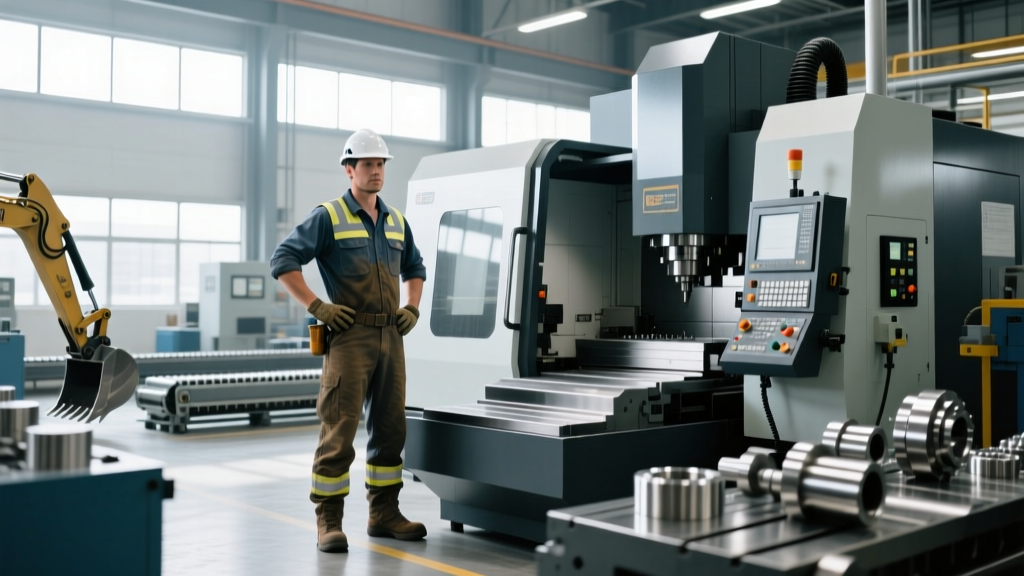
Georgia’s construction and aggregates sectors are robust, driven by continuous infrastructure expansion around Atlanta, Savannah, and Augusta. Operators running standard earthmoving fleets—such as Cat 336 excavators, Komatsu D65 dozers, and articulated haul trucks—typically earn between $26 and $35 per hour. According to the Bureau of Labor Statistics (BLS), the regional wage for construction equipment operators in the Southeast remains closely tied to local union agreements and non-union prevailing wages.
Local Safety and Compliance Requirements
In Georgia, safety compliance is largely governed by standard OSHA construction regulations and state-specific environmental guidelines. Operators are generally required to hold:
- OSHA 10-Hour or 30-Hour Construction cards.
- Georgia Department of Transportation (GDOT) traffic control certifications for highway-adjacent work.
- Basic First Aid/CPR and standard pre-employment urine drug screenings.
While these requirements ensure baseline site safety, they pale in comparison to the regulatory oversight found in remote mining operations. The local heavy equipment operator salary Georgia companies pay reflects this lower compliance overhead.
The FIFO Premium: Remote Mining and Earthmoving
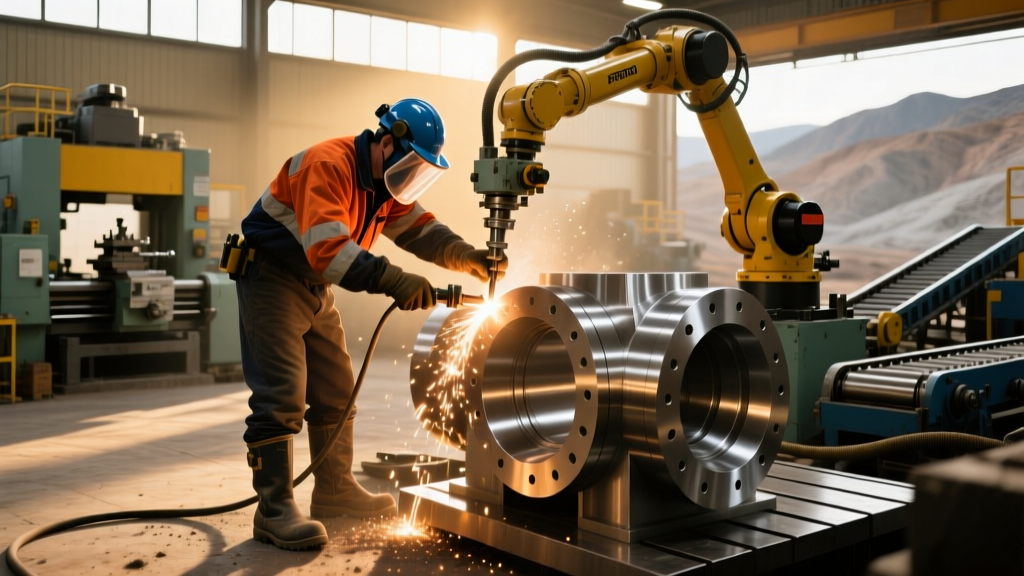
FIFO positions typically involve rotating schedules, such as 14 days on-site followed by 7 days off, or 8 days on and 6 days off. Operators are flown to remote camps in states like Nevada (gold/copper) or Wyoming (coal/trona), or internationally to Western Australia. The equipment scales up dramatically; operators transition from 40-ton articulated trucks to 400-ton ultra-class rigid frame haulers like the Cat 797F or Komatsu 930E, and operate massive rope shovels like the P&H 4100XPC.
The financial premium for FIFO roles compensates for the isolation, the grueling 12-hour shifts, and the intense safety culture. However, mining companies do not hire based solely on seat time. They hire based on verifiable safety compliance and physiological readiness.
Safety Standards & Compliance: The Hidden Gatekeepers
The most significant hurdle for a Georgia-based operator attempting to secure a FIFO contract is the shift from OSHA jurisdiction to the Mine Safety and Health Administration (MSHA). Understanding the distinction between MSHA training modules is critical for your resume and compliance file.
MSHA Part 46 vs. Part 48: Know the Difference
Many Georgia operators working in local sand, gravel, or crushed stone quarries hold MSHA Part 46 training. This is designed for surface mining of specific commodities and requires a minimum of 24 hours of initial training. However, FIFO roles in major metallic or coal mines often fall under MSHA Part 48 (Surface) or Part 48A (Underground) regulations. Part 48 requires a comprehensive 40 hours of initial training before an operator can begin work, plus 8 hours of annual refresher training. If your resume only lists Part 46, remote mine safety managers will flag your application as non-compliant for their specific site operations.
New Task Training and Site-Specific Hazard Awareness
Under MSHA regulations, even a veteran operator with 20 years of experience in Georgia must undergo 'New Task Training' before operating a specific machine model at a new remote site. This is not a suggestion; it is a federally audited requirement. Safety managers will require documented sign-offs on machine-specific pre-operational checklists, blind-spot mapping (critical for 400-ton trucks where the blind spot can exceed 100 feet), and emergency egress drills.
⚠️ Compliance Warning: The Hair Follicle FactorWhile many Georgia construction sites utilize standard 5-panel urine drug tests, FIFO mining operations almost universally mandate 10-panel hair follicle testing. Hair tests detect substance use over a 90-day window. A surprise positive from a weekend event three months prior will result in immediate termination and a permanent ban from the site, regardless of your operating proficiency.
Medical Compliance: The 'Fit for Work' Gauntlet
Remote sites are hours away from advanced trauma centers. Consequently, FIFO operators must pass exhaustive 'Fit for Duty' (FFD) medical assessments. These are far more invasive than the standard DOT physical required for local commercial driving or heavy equipment operation.
| Assessment Type | Georgia Local Standard | FIFO Remote Requirement |
|---|---|---|
| Audiometry | Rarely required unless specific site noise limits are exceeded. | Mandatory baseline and annual testing due to extreme cabin and site noise (often >85 dBA). |
| Spirometry | Not required. | Required to ensure lung capacity for wearing P100/N95 respirators in high-silica dust environments. |
| Cardiovascular | Basic blood pressure check. | Full ECG (Electrocardiogram) and stress test for operators over 45 to prevent cab medical emergencies. |
| Musculoskeletal | Standard physical mobility check. | Functional Capacity Evaluation (FCE) testing ladder climbing (for truck access) and repetitive vibration tolerance. |
Failing the spirometry test is a common reason Georgia operators are rejected from FIFO roles. If you cannot achieve a proper seal with a half-mask respirator, or if your lung function is compromised, you cannot legally enter the high-dust zones of a remote crushing plant or open pit.
Calculating the Real ROI: Gear, Travel, and Taxes
When comparing the heavy equipment operator salary Georgia employers offer against a $120,000 FIFO package, operators must account for the hidden costs of compliance and remote work gear.
- Specialized PPE: Remote mines mandate specific footwear, such as Redback or Blundstone steel-capped lace-up boots (approx. $250-$300), and Fire Resistant (FR) clothing if working near blasting or refueling zones. While companies provide hard hats and high-vis, operators often pay out-of-pocket for premium comfort gear.
- Travel Days: FIFO contracts typically pay for travel days, but only at a base hourly rate, not the overtime or site-allowance rate. A 14/7 roster actually means 16 days away from home when factoring in travel.
- Tax Implications: If you maintain your primary residence and domicile in Georgia, you will still owe Georgia state income tax on your FIFO earnings, even if you work in Wyoming (which has no state income tax). You must consult a CPA to navigate multi-state tax credits and per diem deductions for travel days.
Step-by-Step: Transitioning from GA Local to FIFO
If you decide the remote premium outweighs the local comfort, follow this compliance-driven roadmap to make yourself an attractive, low-risk candidate for remote safety managers.
- Audit Your MSHA Status: Obtain your official MSHA 5000-23 training certificates. If you only have Part 46, enroll in a Part 48 Surface Mining initial training course before applying to major metallic mines.
- Pre-Emptive Medical Screening: Pay out-of-pocket for a private audiogram and spirometry test in Georgia. If you fail, address the issues (e.g., earwax removal, asthma management) before spending thousands on flights for a corporate medical that will reject you on the spot.
- Update Your Logbook: FIFO recruiters look for specific machine hours. Document your exact hours on ultra-class or large-frame equipment. If you only have experience on a Cat 320, you are not ready for a FIFO haul truck role; seek local quarry work on larger rigid frame trucks first.
- Secure Your References: Remote safety managers will call your previous site supervisors specifically to ask about your safety interventions, near-miss reporting, and adherence to Lock-Out/Tag-Out (LOTO) procedures. Ensure your references can speak to your safety mindset, not just your productivity.
The decision to leave the local Georgia market for remote FIFO work is ultimately a trade-off between lifestyle and financial acceleration. By mastering the safety standards, securing the correct MSHA certifications, and passing the rigorous medical compliance checks, operators can successfully bridge the gap and unlock the highest earning tier in the heavy machinery industry.