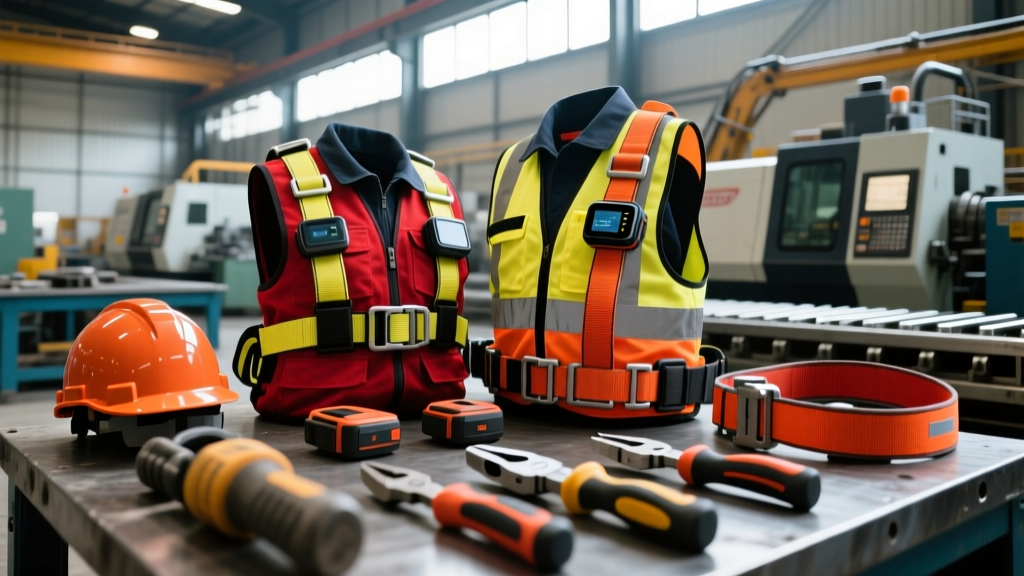
FIFO Tools and Equipment Used for Heavy Equipment Operator Safety
Explore the mandatory safety tools and equipment used for heavy equipment operator FIFO roles, including fatigue tech, survival gear, and compliance.
The Compounding Risk Matrix of Remote Operations
Fly-In Fly-Out (FIFO) and remote heavy equipment operations present a compounding risk matrix that local yard managers rarely encounter. When an operator is running a 100-ton excavator in the Pilbara region of Western Australia or a remote mining camp in Northern Canada, the primary safety variable shifts from immediate mechanical hazard to isolation and fatigue. Medical evacuation times in these zones frequently exceed four hours, and ambient temperatures can swing from 45°C (113°F) daytime heat to sub-zero nighttime drops.
Because emergency response is delayed, the preventative tools and equipment used for heavy equipment operator deployments must function as autonomous life-support and monitoring systems. Compliance in these environments goes beyond standard hard hats and steel-toe boots; it requires integrated biometric tracking, cab-based telemetry, and specialized survival gear.
⚠️ CRITICAL HAZARD MULTIPLIER: According to the National Institute for Occupational Safety and Health (NIOSH), working 12-hour shifts in remote environments degrades cognitive reaction times equivalent to a blood alcohol concentration of 0.05% by day four of a standard 14-day FIFO roster. Equipment selection must actively mitigate this physiological decline.Cab-Based Tools and Equipment Used for Heavy Equipment Operator Health
The cabin of a modern haul truck or dozer is not just a workspace; it is a controlled environment that must protect the operator from Whole-Body Vibration (WBV) and microsleeps. The specific tools and equipment used for heavy equipment operator health inside the cab are strictly regulated under ISO 2631-1 (WBV standards) and regional mining mandates.
1. Active Fatigue Management Systems (FMS)
Passive alarms are insufficient for remote sites. Modern FIFO fleets mandate retinal-tracking FMS. The Seeing Machines Guardian system is the current industry benchmark. It utilizes near-infrared cameras to track PERCLOS (Percentage of Eyelid Closure) and head-pose vectors.
- Hardware Cost: ~$4,500 per cab installation.
- Telemetry Subscription: ~$65/month per unit for real-time dispatch monitoring.
- Compliance Feature: Triggers a localized 100dB cab alarm and simultaneously pings the remote camp dispatcher if microsleep exceeds 1.5 seconds.
2. Pneumatic Suspension Seating
Operating a Caterpillar D11 dozer over uneven blasted rock transmits severe low-frequency vibrations to the lumbar spine. Standard mechanical seats fail to dampen this. FIFO compliance requires advanced pneumatic seats like the Grammer MSG95 or ISRI 6860/875 NTS.
- Specifications: 150mm suspension stroke, active weight adjustment, and integrated seatbelt pretensioners.
- Cost: $1,400 to $1,850 per unit.
- Maintenance Interval: Air bladders and shock absorbers must be replaced every 4,000 operating hours to maintain ISO 2631-1 damping compliance.
Remote Telemetry and Biometric Wearables
Personal Protective Equipment (PPE) in remote zones now includes smart telemetry. Heat stress and dehydration are leading causes of equipment roll-overs in arid FIFO camps. Operators are increasingly issued ruggedized smartwatches, such as the Garmin Instinct 2 Solar, integrated with site-wide health dashboards.
These devices monitor Heart Rate Variability (HRV) and ambient thermal load. If an operator's core temperature proxy crosses the dangerous threshold during a midday shift in an un-air-conditioned cab (or during external maintenance), the watch vibrates and alerts the site medic. The solar charging capability ensures the device survives a 14-day roster without needing a USB cable, eliminating a common point of failure in off-grid camps.
Equipment Matrix: Local Yard vs. FIFO Deployment
The gear required for a local municipal equipment yard differs vastly from a remote mining or forestry deployment. Below is a comparative matrix of mandatory safety equipment.
| Equipment Category | Local / Municipal Yard | Remote FIFO Deployment |
|---|---|---|
| Communication | UHF/VHF Radio, Cell Phone | Iridium 9555 Sat-Phone, Garmin inReach Mini 2 |
| Fatigue Monitoring | Manual logbooks, dashcams | Retinal FMS (Seeing Machines), Biometric wearables |
| Illumination | Standard 300-lumen headlamp | Explosion-proof 800-lumen ATEX-certified headlamp |
| Emergency Survival | First aid kit in site truck | Cab-mounted 72-hour thermal bivouac & water ration |
Emergency Survival Gear for Isolated Breakdowns
When a haul truck throws a track or suffers a catastrophic hydraulic failure 80 miles from the main camp, the operator transitions from a machinery role to a survival role. Remote safety compliance dictates that the machine itself must serve as a life raft.
"In remote earthmoving, your cab is your primary survival shelter. Never abandon a stranded machine for a distant landmark unless the machine itself is compromised by fire or flood. The thermal mass of a 40-ton steel cab and its integrated HVAC system are your best defenses against extreme ambient temperatures."
The Mandatory Remote Breakdown Kit
Every piece of heavy equipment deployed outside a 20km radius from camp must be equipped with a sealed, tamper-evident survival cache. This includes:
- Iridium 9555 Satellite Phone: Hardwired to the cab's 24V electrical system with a magnetic roof antenna. (Hardware cost: $1,250; Airtime: $130/month).
- Thermal Bivouac Sack: Heavy-duty Mylar emergency blankets rated for -20°C, stored in a waterproof Pelican 1050 case bolted to the cab floor.
- Water Ration: 5-liter sealed emergency water pouches with a 5-year shelf life, inspected during every 250-hour PM (Preventative Maintenance) service.
- High-Visibility Markers: Fluorescent orange survey tape and magnetic roof beacons to ensure the machine is visible to aerial medevac helicopters in white-out or dust-storm conditions.
Regulatory Compliance and Roster Mandates
Safety standards for FIFO operators are governed by a patchwork of federal and regional regulations. In the United States, the Mine Safety and Health Administration (MSHA) enforces strict guidelines under 30 CFR Part 56/57 regarding equipment maintenance and operator fitness for duty. However, MSHA leaves specific roster limits largely to the operator's internal safety management systems.
Conversely, international frameworks provide stricter baseline mandates. Safe Work Australia publishes exhaustive guidelines on managing fatigue in FIFO operations, heavily scrutinizing 14-day on / 7-day off (14:7) rosters. Compliance officers now require companies to utilize predictive fatigue modeling software (like FAID Quantum) to prove that the specific tools, shift lengths, and equipment vibration profiles do not push operators beyond acceptable physiological limits.
💡 COMPLIANCE TIP: If you are an independent contractor bidding on remote FIFO work, explicitly list your cab-based FMS and WBV-dampening seat models in your safety proposal. Site managers prioritize contractors who bring their own compliant telemetry over those who rely on aging fleet equipment.Pre-Deployment Safety Checklist for FIFO Operators
Before flying out to a remote camp, operators must verify their personal and machine-specific safety gear. Use this exact framework to ensure compliance and personal safety:
- Verify Sat-Comms: Test the Iridium sat-phone and Garmin inReach SOS function outside the camp's Wi-Fi/cellular radius.
- Inspect Seat Pneumatics: Sit in the operator seat, engage the weight adjustment, and ensure the suspension compressor cycles and holds pressure without leaking.
- Check FMS Camera Alignment: Ensure the retinal tracking camera has an unobstructed view of your eyes, even when wearing polarized safety glasses.
- Audit the Survival Cache: Break the tamper-evident seal on the emergency water rations if they are within 6 months of expiration, and replace them immediately.
- Review Medevac Coordinates: Program the GPS coordinates of the nearest certified trauma landing zone into your cab's navigation display before starting the shift.
Frequently Asked Questions (FAQ)
Are fatigue monitoring cameras an invasion of privacy in the cab?
No. Under most remote mining and FIFO compliance frameworks, the cameras utilize near-infrared edge-computing. The system only processes geometric data (eyelid closure, head pitch) locally and does not record or transmit live video footage of the operator unless a critical fatigue event is triggered, at which point a 10-second clip is sent to the safety dispatcher for incident verification.
Who pays for the specialized FIFO survival and telemetry gear?
For company-owned fleets, the mining or earthmoving corporation bears the cost of FMS, satellite comms, and survival caches. If you are an owner-operator leasing your machine to a remote site, the contract usually stipulates that you must retrofit your cab to the site's specific telemetry standards, which can cost between $6,000 and $8,500 out-of-pocket before mobilization.