Average Pay for Heavy Equipment Mechanic vs Operator: Career Guide
Compare the average pay for heavy equipment mechanic and operator roles. Explore career paths, daily duties, and earning potential in this guide.
The Core Dilemma: Service Truck vs. Machine Cab
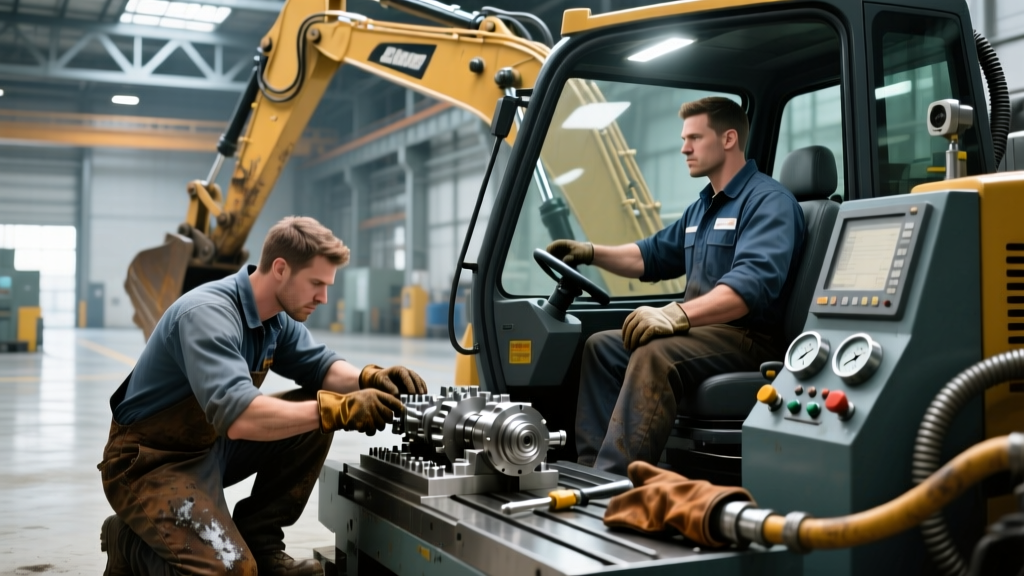
The heavy equipment industry relies on two distinct pillars to keep earthmoving, mining, and forestry projects profitable: the operators who execute the work and the mechanics who ensure the iron doesn't quit. Choosing between these career paths is rarely just about which environment you prefer. It requires a hard look at compensation structures, physical depreciation, and the specific technical skills that trigger pay bumps in the current market.
When evaluating the average pay for heavy equipment mechanic roles versus heavy equipment operator positions, base hourly wages only tell a fraction of the story. Overtime availability, union prevailing wages, tool allowances, and the premium placed on advanced diagnostic skills create vastly different financial trajectories over a 20-year career.
Compensation Matrix: Mechanic vs. Operator Earning Potential
According to the U.S. Bureau of Labor Statistics (BLS), mobile heavy equipment mechanics and construction equipment operators show distinct compensation profiles. The table below breaks down the real-world financial variables beyond the median base rate.
| Compensation Metric | Heavy Equipment Mechanic (Field Service/Shop) | Heavy Equipment Operator (Civil/Mining) |
|---|---|---|
| Median Base Pay (Non-Union) | $32.00 - $38.00 / hour | $28.00 - $34.00 / hour |
| Union Prevailing Wage Ceiling | $55.00 - $75.00+ / hour (Total Package) | $60.00 - $85.00+ / hour (Total Package) |
| Overtime Availability | High (Breakdowns dictate 60-70 hr weeks) | Moderate (Tied to project deadlines/weather) |
| Tool & Equipment Allowance | $1,500 - $3,500 annually + boot allowances | Rare (PPE provided, minimal personal tools) |
| Travel & Per Diem | Frequent (Field techs earn $60-$100/day tax-free) | Rare (Usually tied to a single job site) |
| Pay Ceiling (Top 10%) | $115,000+ (Master Diagnostics/OEM Rep) | $120,000+ (Specialized Crane/Dredge/Tunnel) |
The Troubleshooting Premium: How Mechanics Scale Their Income
In the repair and maintenance sector, your paycheck is directly tethered to your diagnostic speed and accuracy. The industry is currently flooded with Tier 4 Final and Stage V emissions-compliant machines. These platforms are rolling data centers, requiring mechanics to transition from traditional wrench-turners to heavy-duty network administrators.
The Three Tiers of Mechanic Pay
- Tier 1: Preventative Maintenance (PM) & Undercarriage ($24 - $30/hr): Greasing pivots, swapping hydraulic hoses, and pressing track pins. This work is physically brutal but requires minimal diagnostic software knowledge.
- Tier 2: Component R&R ($32 - $40/hr): Remove and replace tasks. Pulling a failed hydraulic pump or swapping a final drive. You follow the service manual, torque to spec, and bleed the system.
- Tier 3: Electronic & Hydraulic Diagnostics ($45 - $65+/hr): This is where the average pay for heavy equipment mechanic roles spikes. A Tier 3 tech doesn't guess. When a Caterpillar 336 excavator throws a derate code for the Selective Catalytic Reduction (SCR) system, the Tier 3 tech uses Cat Electronic Technician (ET) software to analyze NOx sensor gradients, DEF dosing valve pulse-width modulation, and exhaust temperature differentials to isolate the exact failure point without throwing expensive parts at the machine.
Mechanics who master OEM diagnostic suites—such as John Deere Service Advisor, Komatsu KOMTRAX, or Volvo VCADS—command a massive premium. Dealerships and private fleets will pay top dollar for technicians who can diagnose a parasitic electrical draw or a hydrostatic transmission pressure drop in 45 minutes instead of four hours.
The Precision Execution Premium: How Operators Scale Their Income
Operating heavy machinery is no longer just about pulling levers and feeling the hydraulics. Modern civil construction relies on millimeter-accurate GPS grade control systems. Operators who master these interfaces are the ones securing the top-tier contracts and prevailing wage jobs.
High-Value Operator Skillsets
- 3D Machine Control Mastery: Operators proficient in Trimble Earthworks or Topcon Siteworks can run a dozer or motor grader directly from a 3D digital terrain model (DTM). An operator who can finish-grade a commercial building pad within a 10mm tolerance using GPS saves the general contractor thousands of dollars in surveyor stakes and laser-guided follow-up work.
- Specialized Rigging & Lift Planning: Operating a 300-ton lattice boom crawler crane requires NCCCO (National Commission for the Certification of Crane Operators) certification, deep knowledge of load charts, ground bearing pressure calculations, and wind-speed derating. These operators routinely clear $100,000 annually.
- Production Trenching & Shoring: Running a Cat 390F L excavator in a deep, shored trench for municipal water lines requires intense spatial awareness and an understanding of soil mechanics to avoid catastrophic cave-ins. This high-risk environment commands premium hazard pay.
Physical Depreciation: The Hidden Cost of the Trade
Both careers extract a severe physical toll, but the failure modes of the human body differ drastically between the shop floor and the machine cab. Factoring in long-term healthcare costs and career longevity is vital when comparing total lifetime earnings.
Mechanic Failure Modes
Mechanics battle extreme ergonomic stress. Crawling under a 50-ton articulating hauler to diagnose a leaking steering cylinder places immense strain on the cervical spine and shoulders. Furthermore, exposure to atomized hydraulic fluid (which can cause injection injuries), carcinogenic diesel exhaust particulate, and 140°F fluid burns leads to high rates of early-career burnout. By age 50, many mechanics are forced to transition to shop foreman or service writer roles to save their joints.
Operator Failure Modes
Operators face Whole-Body Vibration (WBV) and prolonged static postures. Sitting in a suspended cab for 10-hour shifts, even with modern air-ride seats, leads to severe lumbar spinal compression and sciatica. Additionally, operators endure chronic UV exposure through cab glass and the mental fatigue of maintaining hyper-vigilance around ground workers and blind spots. The National Center for Construction Education and Research (NCCER) and OSHA continually update ergonomic guidelines for operators, but spinal degradation remains the primary reason operators leave the cab in their late 50s.
Decision Framework: Which Path Aligns With Your Profile?
Use this diagnostic matrix to determine which career path aligns with your natural aptitudes and financial goals.
| Your Strengths & Preferences | Recommended Path | First Certification Step |
|---|---|---|
| You love solving complex puzzles, reading wiring schematics, and don't mind getting covered in grease and diesel soot. | Heavy Equipment Mechanic | Diesel Technology Degree (AAS) or OEM Apprenticeship (e.g., Cat ThinkBIG) |
| You possess high spatial awareness, excellent hand-eye coordination, and prefer to see the immediate physical results of moving earth. | Heavy Equipment Operator | NCCER Heavy Equipment Operations or Local Union Apprenticeship (IUOE) |
| You want maximum overtime, enjoy traveling to different sites, and want to leverage software/IT skills in a blue-collar environment. | Field Service Mechanic | Advanced Electronics & Hydraulics Certifications (e.g., Danfoss, Bosch Rexroth) |
| You want high base pay with minimal take-home work, prefer a consistent job site, and thrive in high-stakes, precision environments. | Specialized Crane/GPS Operator | NCCCO Crane Certification or Trimble/Topcon Machine Control Training |
Ultimately, the decision between turning wrenches and pulling levers comes down to how you prefer to solve problems. If you want to fix the machine's nervous system and capitalize on the industry-wide technician shortage, pursue diagnostics. If you want to manipulate the physical world and master spatial geometry, step into the cab.