Operator Training: Excavator & Heavy Equipment Rentals in Northern NH
Master operator training and best practices for excavator & heavy equipment rentals in Northern NH. Conquer granite, frost, and steep grades safely.
The Rental Acclimatization Protocol
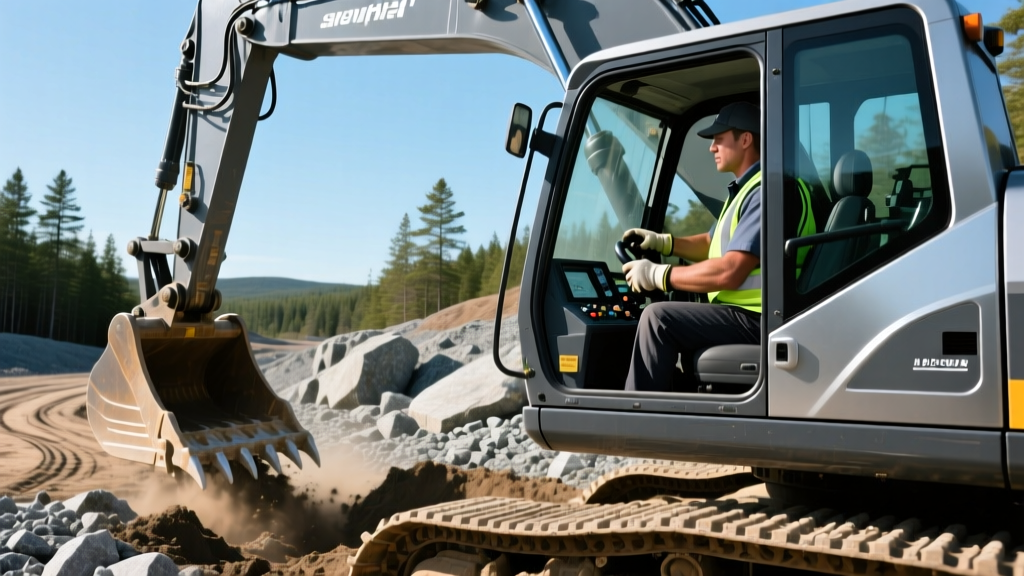
Operating earthmoving machinery in Coos and Grafton counties requires navigating dense forestry, severe winter gradients, and highly abrasive geology. When contractors utilize excavator & heavy equipment rentals in Northern NH, operators frequently face a critical variable: unfamiliar machine ergonomics and hydraulic response curves. A rented Caterpillar 320 GC will react differently to joystick inputs than a company-owned John Deere 210G LC. Muscle memory built on one brand can lead to over-correction and instability on another, particularly when working near trench edges or on the steep foothills of the White Mountains.
Effective operator training for rented fleets must prioritize a structured acclimatization period. Before engaging in production digging, operators must spend a minimum of 45 minutes in a controlled, flat staging area to map the rental machine’s swing torque, boom drop speed, and hydraulic flow thresholds. This prevents the sudden load shifts that cause track lift and rollovers on uneven Northern New Hampshire terrain.
Terrain Alert: Northern NH Geology Profile
Conway Granite: Prevalent in the White Mountain region, this igneous rock boasts a compressive strength exceeding 20,000 psi. Standard trenching buckets will suffer rapid tooth loss and lip abrasion. Operators must recognize ledge outcroppings and switch to hydraulic hammers or rippers immediately.
Glacial Till & Frost Heaves: Northern NH soils are heavily mixed with unsorted glacial deposits (boulders, sand, and clay). During the spring thaw (April-May), the top 36 inches of soil lose bearing capacity, drastically increasing the risk of machine sinkage and trench wall collapse.
Pre-Operation Inspection for Unfamiliar Fleet
Rental equipment arrives with an unknown operational history. While rental yards perform baseline maintenance, the operator must verify critical stress points before moving the machine to a remote job site where mobile mechanic response times can exceed four hours.
- Track Tension Verification: Lift the front idler using the boom and bucket. Measure the track sag between the carrier roller and the track shoe. For a standard 20-ton class excavator, sag must be between 10 and 12 inches. Overtightened tracks (common on rentals returned from muddy sites) will accelerate undercarriage wear and reduce traction on icy grades.
- Swing Circle Gear Oil: Check the swing drive planetary hub. Low gear oil in this component causes catastrophic ring gear failure when swinging heavy loads of granite uphill.
- Hydraulic Hose Weeping: Inspect the boom-to-stick junction hoses. Look for glazed or blistered rubber, which indicates impending blowouts under high-pressure breakout forces.
- ROPS/FOPS Cab Integrity: Verify that the Roll-Over Protective Structure and Falling Object Protective Structure cab meshes are intact. In heavily wooded Northern NH logging sites, falling widow-makers (dead branches) are a constant hazard.
Cold-Weather Hydraulic Management
Northern New Hampshire experiences prolonged periods where ambient temperatures drop below 10°F (-12°C). Operating a cold hydraulic system causes fluid cavitation, which destroys the main hydraulic pump by creating microscopic vacuum bubbles that implode against metal surfaces. According to guidelines on equipment operation in extreme environments outlined by NIOSH cold stress and safety protocols, machinery requires specific thermal management in freezing conditions.
The 15-Minute Winter Warm-Up Sequence
When starting a rented excavator in sub-freezing NH temperatures, follow this strict sequence to protect the hydraulic architecture:
- Minutes 0-5 (Idle): Start the engine and let it idle at low RPM. Do not touch the joysticks. This allows the engine coolant to begin warming the hydraulic oil cooler.
- Minutes 5-10 (No-Load Cycling): Slowly cycle the boom, stick, and bucket through their full ranges of motion without engaging the ground or lifting a load. This pushes warm oil through the control valves and cylinders.
- Minutes 10-15 (Partial Load): Engage the travel motors by driving forward and backward in a straight line on flat ground. Finally, perform slow, unloaded swing rotations to warm the swing drive grease.
Attachment Selection Matrix for Granite and Glacial Till
Matching the correct attachment to the specific geological challenge is vital for productivity and machine health. When securing excavator & heavy equipment rentals in Northern NH, coordinate attachment delivery with the primary machine to avoid downtime.
| Attachment Type | Best NH Application | Operational Limitation | Est. Daily Rental (2026) |
|---|---|---|---|
| Hydraulic Thumb | Land clearing, handling glacial boulders and logging debris. | Reduces bucket curl force by 15%; requires auxiliary hydraulic flow setup. | $125 - $175 |
| Single-Shank Ripper | Fracturing frost heaves and shallow ledge in Coos County. | High shock loads; requires frequent stick-to-ripper pin greasing. | $90 - $130 |
| Hydraulic Hammer (3,000 ft-lb class) | Breaking solid Conway granite outcroppings. | Causes severe cab vibration; limits operator shift to 4 hours to prevent fatigue. | $250 - $350 |
| Tiltrotator | Precision trenching for utilities in tight, wooded easements. | Requires advanced operator training; adds 400 lbs to the front linkage. | $300 - $450 |
Slope Stability and ROPS Compliance
The topography of the White Mountain National Forest and surrounding areas frequently forces excavation work onto slopes exceeding 20%. Operating heavy machinery on these gradients requires strict adherence to center-of-gravity management. OSHA standard 1926.602 mandates rigorous safety protocols for material handling and earthmoving equipment on inclines, emphasizing the necessity of functional ROPS and proper seatbelt usage to prevent crushing injuries during lateral slides.
Critical Slope Rule: Never swing a loaded bucket uphill. The combined weight of the boom, stick, bucket, and payload (often dense, wet granite or clay) shifts the machine's center of gravity outside the track footprint, resulting in an immediate uphill rollover. Always position the tracks perpendicular to the slope, dig material from the downhill side, and swing to discharge on the downhill or level side.When traversing slopes with a rented excavator, keep the bucket curled inward and hovered no more than 18 inches above the ground. This provides a low center of gravity and allows the operator to instantly drop the bucket to act as an emergency brake if the tracks lose traction on wet leaves or ice.
Frequently Asked Questions
Do rental yards in Northern NH provide GPS grade control?
Most major rental suppliers in the region now offer 2D and 3D GPS machine control as an upgrade on 20-ton and 30-ton class excavators (such as the Cat 323 or Komatsu PC210LCi). Expect to pay a premium of $75 to $120 per day for integrated grade control. This is highly recommended for utility trenching in remote areas where bringing in a separate laser level or surveyor is cost-prohibitive.
How does track type affect rental selection for NH environments?
Standard steel grouser pads (typically 24 to 28 inches wide) are mandatory for rocky, abrasive granite environments to prevent track punctures and provide necessary grip. However, if your rental project involves working on finished surfaces, sensitive wetlands, or soft spring-thaw mud, request a machine equipped with rubber track pads or wide swamp pads (33+ inches) to reduce ground pressure (PSI) and prevent sinkage.
What is the protocol for hydraulic fluid contamination on a rental?
If you notice milky hydraulic fluid during your morning dipstick check, stop operation immediately. Milky fluid indicates water ingress, which is common in Northern NH due to extreme temperature swings causing condensation inside the hydraulic tank. Water in the system will destroy the main pump's bronze slipper plates within hours of high-pressure operation. Contact the rental depot for an immediate fluid flush or machine swap.