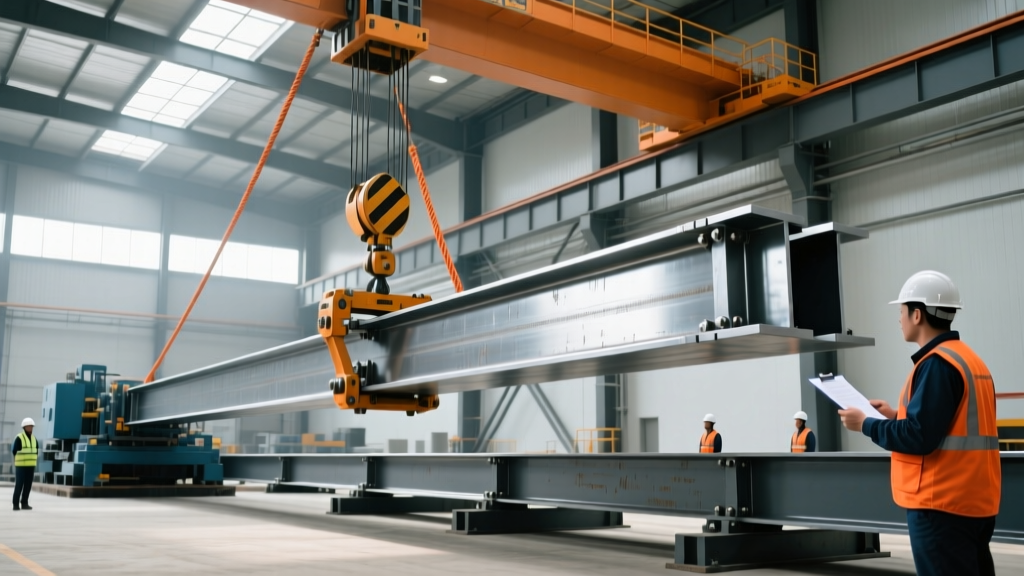
Heavy Equipment Crane Safety: OSHA Compliance & Rigging Standards
Master heavy equipment crane safety with our OSHA 1926 Subpart CC compliance guide. Learn inspection matrices, LMI tech, and ground bearing limits.
Operating a heavy equipment crane involves managing immense kinetic energy and complex load dynamics. A single compliance failure—whether an overlooked wire rope defect or a miscalculated ground bearing pressure—can result in catastrophic structural failure, fatal injuries, and severe regulatory penalties. For site managers and fleet operators, navigating the intersection of OSHA regulations, ASME standards, and manufacturer specifications requires more than a surface-level understanding of safety manuals.
⚠️ Regulatory Penalty Warning: As of the latest OSHA penalty adjustments, willful or repeated violations of crane safety standards carry fines exceeding $161,000 per violation. Serious violations, such as failing to document daily shift inspections, routinely trigger fines starting at $16,131 per instance. Compliance is not optional; it is a critical financial and operational baseline.Decoding OSHA 1926 Subpart CC for Heavy Equipment Cranes
The foundational regulatory framework for heavy equipment crane operations in construction is OSHA 1926 Subpart CC (Cranes and Derricks in Construction). This standard dictates everything from assembly and disassembly protocols to operator certification and power line safety. However, the most frequently cited violations stem from inadequate pre-shift inspections and improper load chart applications.
| OSHA 1926.1400 Requirement | Real-World Application & Failure Mode |
|---|---|
| 1926.1412 - Inspections (Modified, Shift, Monthly) | Operators must document shift inspections. Failure Mode: Relying on mental checklists rather than written/digital logs, resulting in OSHA citations during surprise audits. |
| 1926.1417 - Operation (Load Charts) | Loads must not exceed 75% of the crane's rated capacity for certain dragline operations, and standard lifts must strictly adhere to the OEM load chart. Failure Mode: Interpolating between boom length and radius rather than using the exact chart values. |
| 1926.1408 - Power Line Safety (Up to 350 kV) | Mandatory 20-foot clearance for lines up to 350 kV. Failure Mode: Misjudging boom tip swing radius during slewing operations near overhead transmission lines. |
Pre-Operational Inspection: Beyond the Basic Checklist
A compliant daily shift inspection on a heavy equipment crane requires specialized knowledge of component wear tolerances. Simply looking for "obvious damage" is insufficient and violates the spirit of ASME B30.5 standards.
Wire Rope and Sheave Tolerances
For standard 6x19 class Independent Wire Rope Core (IWRC) hoist ropes, OSHA and ASME mandate immediate discard if any of the following conditions are met:
- Broken Wires: Six randomly distributed broken wires in one rope lay, or three broken wires in one strand in one rope lay.
- Diameter Reduction: Loss of more than 1/3 of the original diameter of the outside wires (typically a 5% reduction in overall rope diameter).
- Birdcaging: Any outward displacement of the outer strands, indicating internal core failure or shock-loading.
Furthermore, sheave grooves must be checked with a sheave gauge. A groove that is too tight (less than 1.05 times the rope diameter) will pinch the rope and accelerate fatigue. A groove that is too wide (greater than 1.08 times the rope diameter) fails to support the rope, causing it to flatten and crush under load.
Hydraulic Cylinder Drift Limits
On hydraulic heavy equipment cranes, such as the Tadano GR-1600XL or Liebherr LTM series, boom and outrigger cylinder drift must be measured. While OEM specifications vary, a general industry rule of thumb is that hydraulic cylinder drift should not exceed 1 inch per hour under a static load. Excessive drift indicates internal seal bypass, which can lead to sudden boom drop or outrigger retraction during a critical lift.
Ground Bearing Pressure and Outrigger Matrices
Ground failure is the leading cause of heavy equipment crane tip-overs. Site managers must calculate the Required Ground Bearing Pressure (RGBP) before deploying outriggers. Relying on visual soil inspection is a critical error; geotechnical data or penetrometer testing is required.
Outrigger Pad Sizing Formula
Total Force (lbs) = Crane Weight + Rigging Weight + Maximum Lifted Load
Pad Area (sq ft) = Total Force / Allowable Soil Bearing Capacity (lbs/sq ft)
Example: A 150,000 lb crane lifting a 40,000 lb load on soil rated for 4,000 lbs/sq ft requires a total outrigger footprint of at least 47.5 sq ft. If using 4 outriggers, each pad must be a minimum of 11.8 sq ft (e.g., a 41x41 inch engineered UHMW pad).
Never use untreated timber cribbing for heavy lifts. Engineered Ultra-High-Molecular-Weight (UHMW) polyethylene outrigger pads provide consistent load distribution and do not suffer from the hidden internal rot or grain-splitting that compromises wooden mats.
LMI and ATB Systems: Calibration and Compliance
Modern heavy equipment cranes are equipped with Load Moment Indicators (LMI) and Anti-Two-Block (ATB) systems. OSHA 1926.1416 requires these devices to be fully operational and correctly calibrated. Bypassing an LMI system to "force" a lift is an immediate terminable offense on most Tier-1 construction sites and carries massive OSHA liability.
System Verification Protocols
- ATB Function Test: Raise the hook block until the ATB weight is triggered. The hoist-up function must immediately disable, while hoist-down remains operational. If the system relies on a physical limit switch, inspect the cable for kinks; if it uses a sensor-based system, verify the telemetry link on the operator display.
- LMI Load Test Calibration: LMIs (such as Liebherr's LICCON 3 or Tadano's AML-F) must be calibrated with a known test weight annually, or anytime the hoist rope is re-reeved or the boom sensors are replaced. The operator must input the exact reeving configuration, boom extension, and counterweight setup into the LMI before the first lift of the shift.
Operator Certification and Qualification Framework
Under OSHA 1926.1427, all heavy equipment crane operators must be certified by an accredited testing organization. The National Commission for the Certification of Crane Operators (NCCCO) remains the industry benchmark. Certification is not a one-time event; it requires recertification every five years, which includes a rigorous written exam and practical load-handling tests.
"A certified operator is legally permitted to run the machine, but they are not automatically qualified to run it on your specific site. The employer retains the legal burden to evaluate and document the operator's competency regarding site-specific hazards, local wind limits, and the exact crane model being deployed." — Industry Safety Compliance Directive
Quick-Reference Compliance Audit Checklist
Use this framework for weekly site audits to ensure your heavy equipment crane operations remain fully compliant:
- [ ] Documentation: Are daily shift inspection logs signed, dated, and retained on-site for a minimum of 3 months?
- [ ] Wire Rope: Has the hoist rope been measured for diameter reduction and inspected for broken wires per 1926.1413?
- [ ] Ground Conditions: Is there a documented soil bearing capacity report and an engineered outrigger pad matting plan?
- [ ] Power Lines: Are dedicated spotters assigned and equipped with proximity alarms when operating within 20 feet of lines up to 350 kV?
- [ ] Rigging Gear: Are all synthetic slings, wire rope slings, and shackles tagged with their Working Load Limit (WLL) and free of UV degradation or chemical burns?
- [ ] LMI/ATB: Is there physical evidence (or digital log) that the Anti-Two-Block system was function-tested at the start of the shift?
Maintaining strict adherence to these heavy equipment crane safety standards mitigates risk, protects your workforce, and insulates your organization from devastating regulatory and financial penalties.
Related reading

Cheap vs Premium Crane Specifications: What You’re Really Paying For

How to Choose Machinery: A Practical, Field-Tested Decision Framework for Construction and Industrial Operations
