CNC Machine Lathe Case Studies: Aerospace & Medical Mill-Turn
Explore real-world CNC machine lathe case studies in aerospace and medical manufacturing, detailing cycle times, tooling, and mill-turn ROI metrics.
The Shift to Multi-Tasking CNC Machine Lathe Configurations
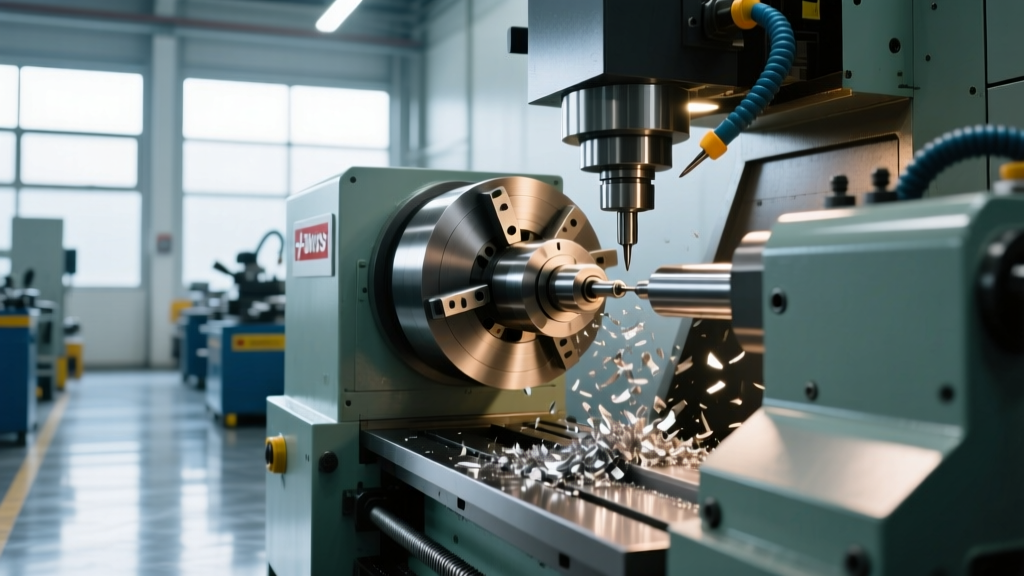
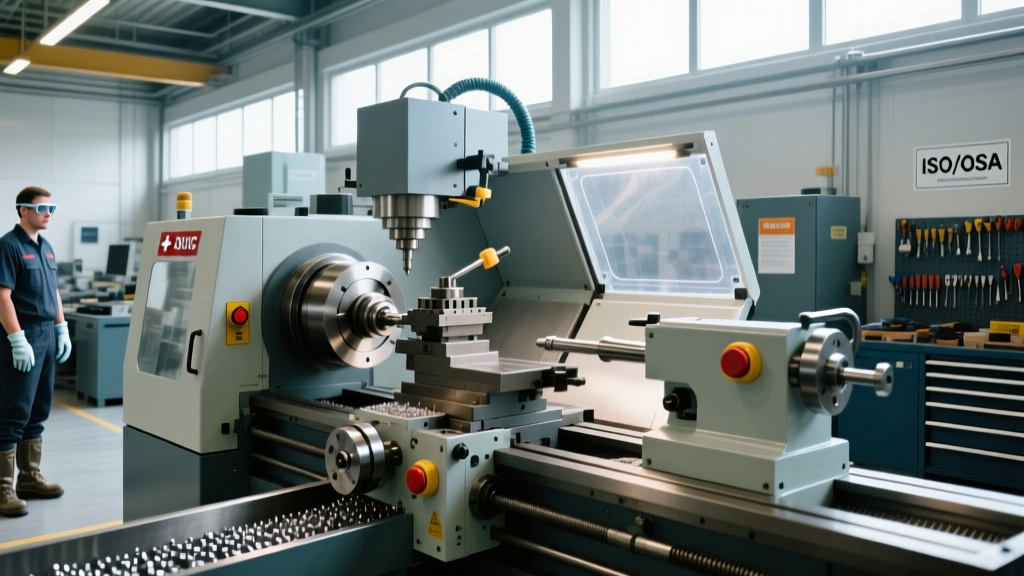
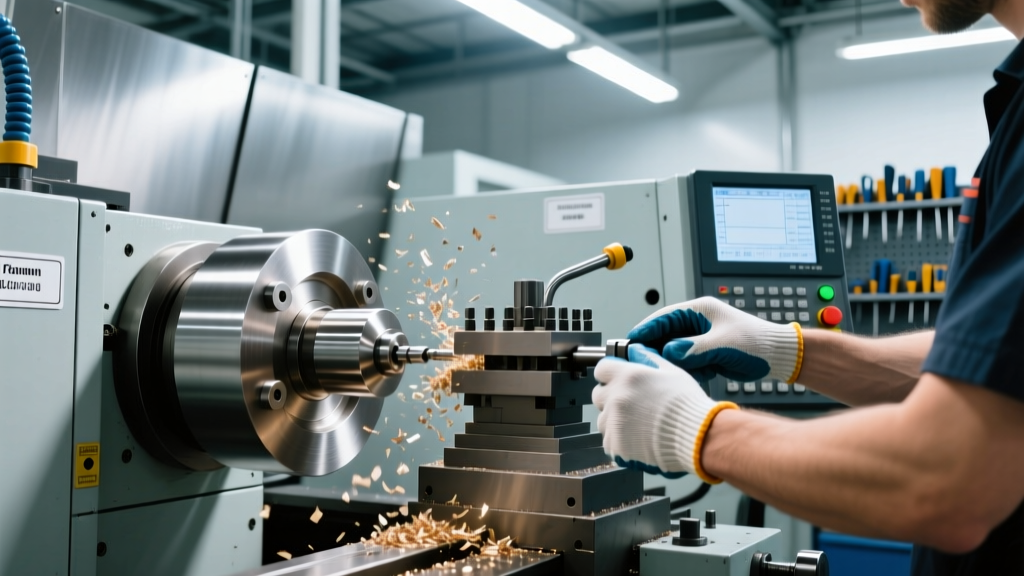
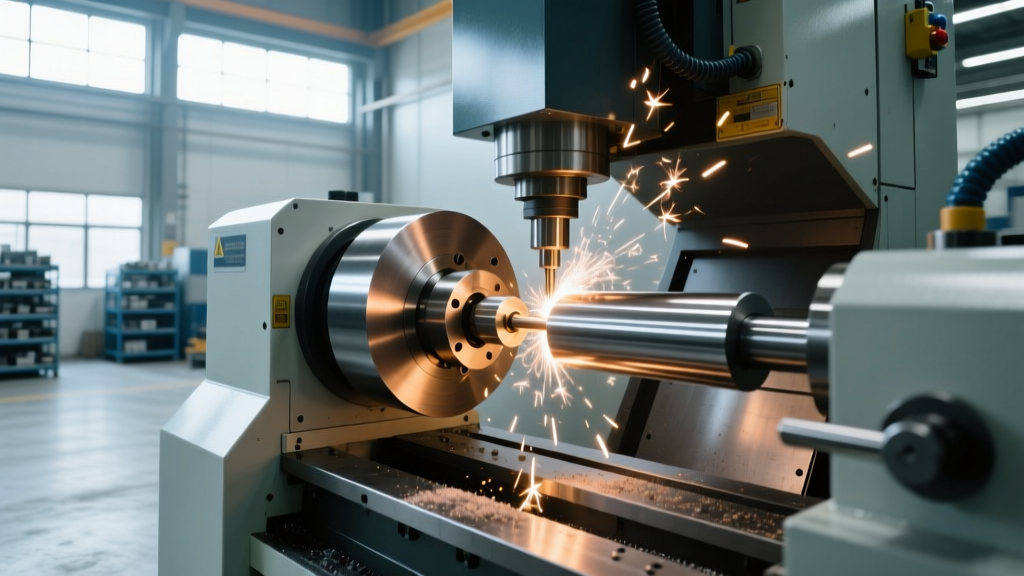
Transitioning from sequential turning and milling operations to a single-setup multi-tasking CNC machine lathe reduces cumulative part tolerance stack-up by up to 40%. In high-mix, low-volume sectors like aerospace and medical device manufacturing, the ability to perform 5-axis simultaneous milling, deep-hole drilling, and precision turning in a single chucking is no longer a luxury—it is a baseline requirement for profitability. This analysis examines two distinct industrial applications where advanced mill-turn centers have replaced traditional 2-axis lathes and standalone vertical machining centers (VMCs), detailing the exact parameters, tooling strategies, and financial outcomes.
Key Performance Indicators (Averages):- Setup Time Reduction: 65% to 80% (eliminating secondary VMC fixturing)
- Cycle Time Improvement: 40% to 55% via overlapping sub-spindle operations
- Scrap Rate Decrease: 2.5% down to 0.4% due to single-chucking accuracy
Aerospace Case Study: Machining Ti-6Al-4V Landing Gear Actuators
Landing gear actuator bodies require complex internal profiles, off-center cross-drilling, and stringent surface finish requirements. Historically, shops utilized a standard 2-axis lathe for the OD and main bore, followed by a 4-axis VMC for the cross-ports and mounting flanges. A Tier-2 aerospace supplier in Ohio transitioned this process to a DMG MORI NTX 2000 2nd Generation CNC machine lathe equipped with a B-axis milling spindle and a lower turret.
Technical Challenges and Tooling Solutions
Titanium alloy Ti-6Al-4V presents severe work-hardening and thermal conductivity challenges. The primary failure mode in traditional setups was insert crater wear during the roughing of the deep internal cavities, leading to catastrophic tool failure at the 45-minute mark. According to Sandvik Coromant's Titanium Machining Guidelines, maintaining a constant cutting temperature and preventing chip re-cutting are paramount.
The supplier implemented Sandvik CoroTurn HP inserts paired with a 1,000 PSI through-tool high-pressure coolant (HPC) system. The high-pressure jet breaks the chip mechanically before it can weld to the rake face, while simultaneously cooling the cutting edge.
| Metric | Traditional 2-Axis + VMC | NTX 2000 Mill-Turn CNC Machine Lathe |
|---|---|---|
| Total Cycle Time | 115 minutes | 48 minutes |
| Fixturing / Setup | 45 minutes (2 setups) | 12 minutes (1 setup) |
| Positional Tolerance (Cross-ports) | ±0.0015" | ±0.0004" |
| Tool Life (Roughing Insert) | 12 parts | 38 parts |
By utilizing the B-axis contouring capability, the machine smoothly interpolated the internal fluid channels without the dwell marks typically left by standard indexable boring bars. The lower turret was deployed to support the part with a steady rest while the upper B-axis turret performed heavy off-center milling, completely neutralizing chatter.
Medical Device Case Study: PEEK and 316LVM Orthopedic Implants
The medical sector demands extreme precision, biocompatibility, and flawless surface finishes. A manufacturer of spinal fusion cages and orthopedic bone screws faced bottlenecks machining PEEK (Polyether ether ketone) and 316LVM (Vacuum Melted) stainless steel. The primary challenge with PEEK is thermal smearing; if the cutting edge is dull or the chip evacuation is poor, the polymer melts and re-welds to the part, creating micro-burrs that fail FDA visual inspection standards.
Optimizing the Mazak INTEGREX i-100ST
The facility upgraded to a Mazak INTEGREX i-100ST multi-tasking CNC machine lathe. As highlighted in Mazak's Medical Manufacturing Solutions, the integration of a sub-spindle and Y-axis is critical for completing complex bone screw geometries in a single cycle. The engineering team established the following strict parameters for the PEEK components:
- Insert Geometry: Uncoated carbide with a 15-degree positive rake angle and a razor-sharp hone (less than 2-micron edge radius) to slice the polymer rather than push it.
- Cutting Speed: 800 SFM (Surface Feet per Minute) to ensure the heat is carried away by the chip, not absorbed by the workpiece.
- Coolant Strategy: Flood coolant with an air-blast assist to physically blow the stringy PEEK chips out of the deep thread cavities.
For the 316LVM bone screws, the sub-spindle was utilized to perform back-turning and back-drilling operations. The main spindle roughed the hex drive and major diameter, then transferred the part to the sub-spindle. The sub-spindle finished the threaded tip and parted off, eliminating the secondary deburring operation entirely. Cycle times dropped from 14 minutes per screw to 5.5 minutes.
Capital Expenditure and ROI Decision Framework
Procuring a 5-axis mill-turn CNC machine lathe requires a significant capital outlay. Current 2026 pricing for a fully equipped machine like the DMG MORI NTX 2000 ranges from $650,000 to $850,000, depending on automation integration and bar feeder options. Smaller footprint machines like the Mazak INTEGREX i-100ST typically fall between $380,000 and $480,000.
ROI Calculation Matrix
To justify the investment, shops must calculate the true cost of secondary operations. Use this framework:
- Calculate Burden Rate: Fully burdened shop rate (e.g., $145/hour).
- Identify WIP Handling Costs: Time spent moving parts from lathe to VMC, including inspection between ops (typically adds 20% to total lead time).
- Factor in Scrap: If 3% of parts are scrapped at the VMC stage due to concentricity errors, multiply the total material and prior machining cost by 0.03.
- Software & Tooling: Allocate $25,000 for advanced Mill-Turn CAM software (e.g., Mastercam or ESPRIT) and $30,000 for initial B-axis tooling and high-pressure coolant pumps.
Rule of Thumb: If a part requires more than two distinct setups on conventional machines and features off-center holes or complex contours, a multi-tasking CNC machine lathe will yield a positive ROI within 14 to 18 months on production runs exceeding 500 parts annually.
CAM Programming and Collision Avoidance
The physical capabilities of a CNC machine lathe are bottlenecked by the shop's CAM programming proficiency. Mill-turn programming introduces severe collision risks, particularly when the B-axis spindle and the lower turret operate simultaneously within the main spindle's work envelope.
Advanced shops utilize kinematic simulation software to verify G-code before it reaches the machine controller. According to research tracked by the NIST Advanced Manufacturing Portal, digital twin verification reduces machine crash rates by over 90% in multi-axis environments. Programmers must define exact toolholder clearances, chuck jaw profiles, and sub-spindle transfer kinematics within the CAM environment. Failing to model the exact chuck jaw geometry often results in the B-axis toolholder colliding with the jaw step during deep internal milling operations.
Mitigating Thermal Growth in Long-Run Production
Even with single-setup advantages, thermal growth remains a critical variable in high-precision CNC machine lathe applications. When machining 17-4 PH stainless steel shafts over a 12-hour unmanned shift, spindle and ball-screw thermal expansion can shift the Z-axis zero point by up to 0.0008". To combat this, modern mill-turn centers utilize real-time thermal compensation sensors embedded in the spindle housing and ball-screws. The machine's CNC controller dynamically adjusts the Z and X axis offsets based on ambient and operational temperature gradients, ensuring that the 500th part in a batch holds the same ±0.0002" concentricity as the first part.