How Lean Manufacturing Transforms Railroads Fittings CNC Machining in Houston
Discover how lean manufacturing principles optimize railroads fittings CNC machining in Houston, reducing setup times and ensuring strict AREMA compliance.
The Technical Demands of Railroad Fittings Manufacturing
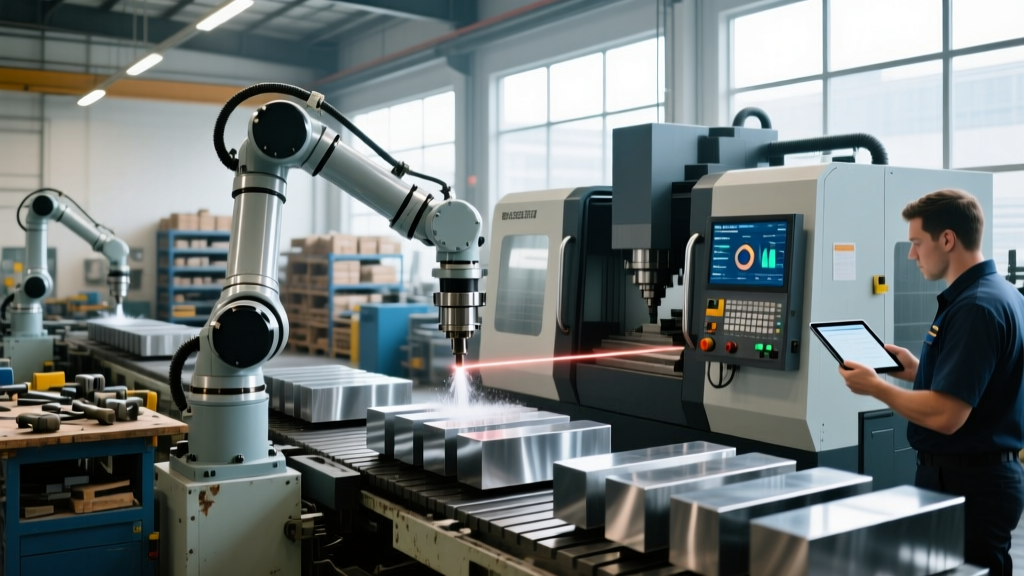
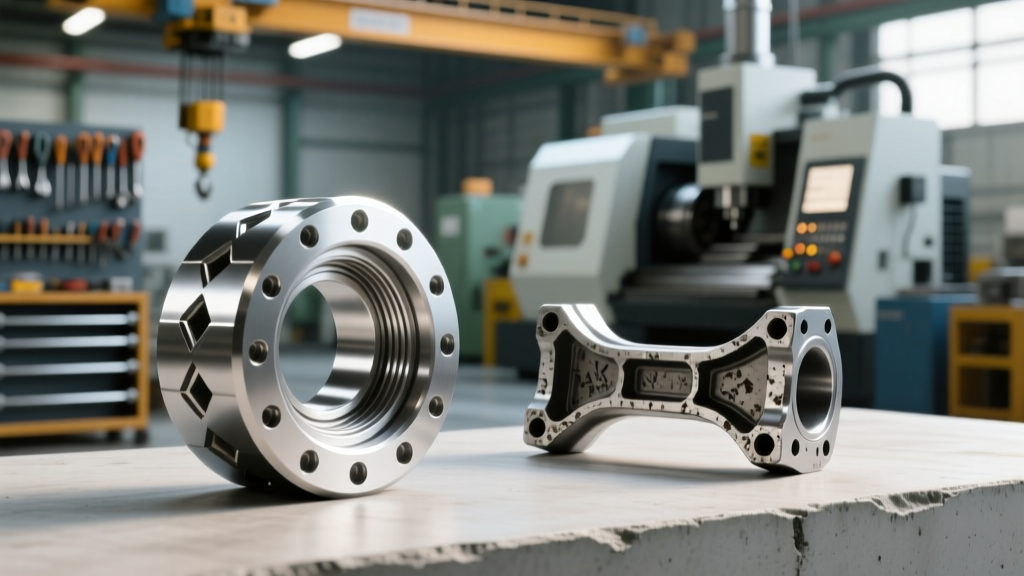
Houston’s position as a premier North American rail logistics and maintenance hub dictates a massive, continuous demand for precision railroad fittings. Machining critical components—such as switch points, frog assemblies, guard rail flangeways, and custom coupling braces—requires navigating extreme material hardness, complex geometries, and stringent AREMA (American Railway Engineering and Maintenance-of-Way Association) standards. When shops approach railroads fittings CNC machining in Houston using traditional job-shop methodologies, they inevitably face high scrap rates, excessive spindle downtime, and bottlenecked inspection queues.
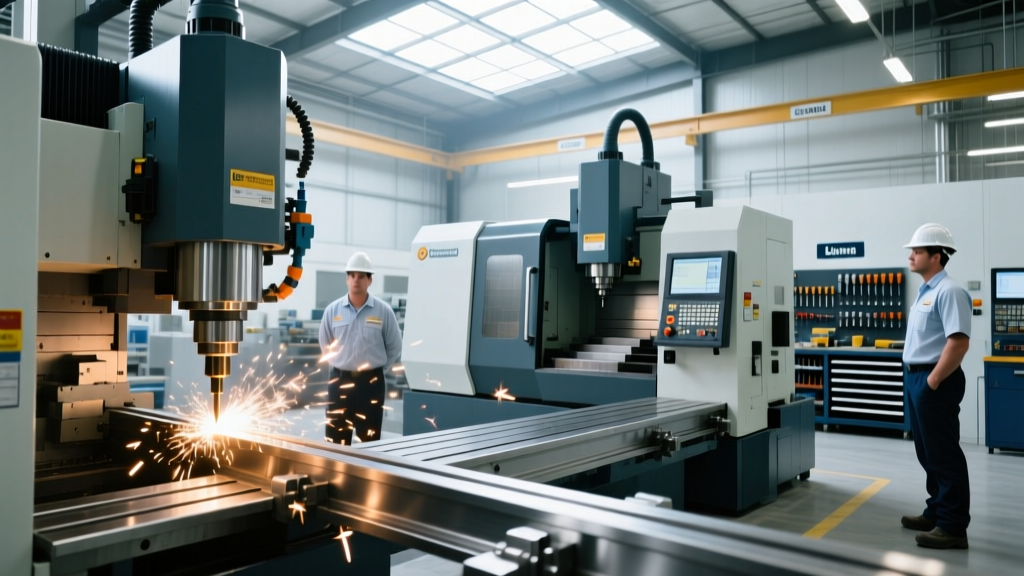
By integrating lean manufacturing principles directly into the CNC cell workflow, machine shops can transform chaotic production floors into synchronized, high-OEE (Overall Equipment Effectiveness) environments. This requires a deep understanding of both the metallurgical specifications of rail components and the mechanical execution of lean cellular manufacturing.
Material and Tolerance Specifications
The technical baseline for railroad fittings dictates the use of high-stress alloys. The most challenging material in this sector is ASTM A128 Grade C (Hadfield Manganese steel), frequently used for frogs and switch points due to its unique ability to work-harden from 200 BHN to over 500 BHN under impact loading. Standard tie plates and braces typically utilize AISI 4140 or 1045 high-carbon steel.
- Switch Rail Base Profiles: Require a flatness tolerance of ±0.005" over 48-inch lengths to ensure seamless mating with the stock rail.
- Frog Throat Cavities: Demand strict ±0.002" profile tolerances to guide wheel flanges without inducing destructive harmonic vibrations.
- Surface Finish: Mating surfaces must achieve a 63 µin (1.6 µm) Ra or better to prevent micro-welding under dynamic train loads.
Implementing Lean Cellular Manufacturing for Heavy CNC
Lean manufacturing in heavy-duty CNC machining diverges significantly from high-volume, small-part production. Moving 2,000-pound manganese steel castings requires a specialized approach to the lean principles outlined by NIST, focusing heavily on SMED (Single-Minute Exchange of Die) and standardized kitting rather than simple continuous flow.
The SMED Advantage in Heavy Machining
In traditional shops, indicating and clamping a massive frog casting on a 5-axis trunnion table can take up to 4 hours. By implementing SMED, shops utilize standardized hydraulic tombstones and zero-point clamping systems (such as Schunk Vero-S). The casting is pre-fixtured on a sub-plate outside the machine envelope. The actual machine swap takes less than 15 minutes, converting internal setup time to external setup time and drastically increasing spindle utilization.
The Lean CNC Workflow: Step-by-Step Execution
Achieving precision in railroads fittings CNC machining in Houston requires a rigid, repeatable workflow that eliminates variability. Below is the optimized, lean-driven sequence from raw casting to final inspection.
- Digital Twin & CAM Verification: Before metal is cut, toolpaths are simulated using Vericut or similar digital twin software. This is critical for Hadfield manganese, where an unverified plunge move can shatter a $400 carbide end mill and damage the spindle bearings due to the material's severe work-hardening characteristics.
- External Kitting and Pre-Staging: All tooling, hydraulic fixture hoses, and raw castings are staged in a shadow-boarded cart adjacent to the CNC cell. Operators never leave the machine envelope to search for a wrench or a specific shim.
- Zero-Point Fixturing Load: Using overhead gantry cranes, the pre-fixtured casting is locked into the machine's zero-point receivers. Hydraulic pressure is automatically applied to 8,000 PSI, ensuring uniform clamping force that prevents part distortion during heavy roughing passes.
- Adaptive In-Process Gauging: Instead of pausing for manual micrometer checks, a Renishaw Equator or OMP60 spindle probe runs automated routines after the semi-finishing pass. The CNC control automatically updates tool wear offsets based on the probe data, compensating for thermal expansion in the machine column.
Traditional vs. Lean Workflow Metrics
The transition to a lean workflow yields measurable improvements across all critical KPIs. The data below reflects average performance metrics for a mid-sized Houston machine shop producing AREMA-standard frog assemblies before and after lean implementation.
| Metric | Traditional Job Shop Workflow | Lean Cellular Workflow | Improvement Factor |
|---|---|---|---|
| Average Setup Time (Heavy Castings) | 210 minutes | 38 minutes | 81% Reduction |
| Spindle Utilization (OEE) | 42% | 78% | +36 Percentage Points |
| First-Pass Yield (FPY) | 84% | 97.5% | +13.5% |
| Tool Life Management | Reactive (Run-to-failure) | Predictive (Vibration/Load monitoring) | 30% Less Tooling Cost |
Advanced Fixturing and Tooling Strategies
Lean workflows are only as effective as the hardware executing them. Machining railroad fittings requires specialized tooling designed to withstand interrupted cuts and extreme abrasion.
Combating Work-Hardening with High-Pressure Coolant
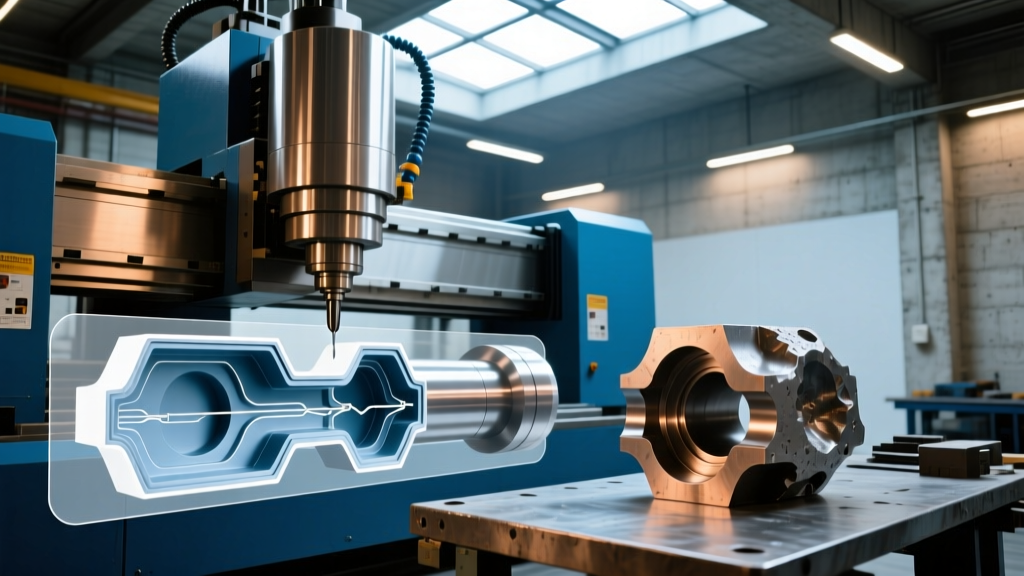
When machining the deep flangeways of guard rails, chip evacuation is a primary failure mode. If chips remain in the cut, they are re-machined, instantly work-hardening and destroying the cutting edge. Lean shops utilize high-pressure, through-tool coolant systems operating at 1,000 PSI (70 bar). This pressure physically shears the chip at the shear zone, preventing bird-nesting and extending tool life by up to 40%.
Warning: Manganese Steel Chatter
Never use standard long-reach end mills for deep cavity roughing in ASTM A128. The lack of rigidity induces chatter, which work-hardens the surface layer to an unmachinable state. Always utilize solid carbide anti-vibration boring bars or indexable mills with variable helix geometries (such as the Sandvik Coromant CoroMill 390) to break harmonic frequencies.
Standardized Tooling Libraries
A core tenet of lean manufacturing championed by the SME is the reduction of variation. In the CNC tool crib, this means standardizing insert geometries and grades across multiple part families. By limiting the shop to two primary carbide grades (e.g., a PVD-coated grade for manganese and a CVD-coated grade for 4140 steel), the shop reduces inventory carrying costs, simplifies operator training, and ensures that optimal cutting parameters are universally understood.
Quality Assurance and Traceability
Railroad fittings operate in safety-critical environments governed by the Federal Railroad Administration (FRA). A lean workflow does not sacrifice quality for speed; it builds quality into the process. Every machined fitting is laser-etched with a serialized QR code linking to its specific CMM (Coordinate Measuring Machine) report, material heat lot, and operator sign-off. This closed-loop traceability ensures that if a switch point fails in the field, engineers can trace the exact spindle load data and tooling batch used during its production, facilitating rapid root-cause analysis and continuous workflow refinement.