Safety Standards for Brass CNC Machining Parts in Auto Aftermarket
Explore DOT and SAE safety compliance requirements for brass CNC machining parts used in automotive aftermarket fuel, brake, and suspension systems.
Material Science and Chemical Compliance in Brass Alloys
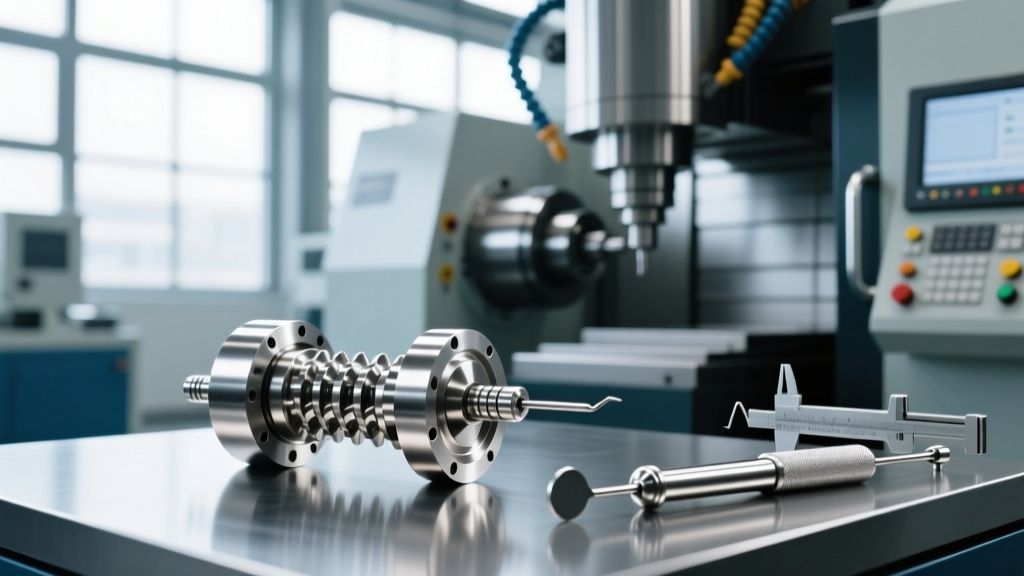
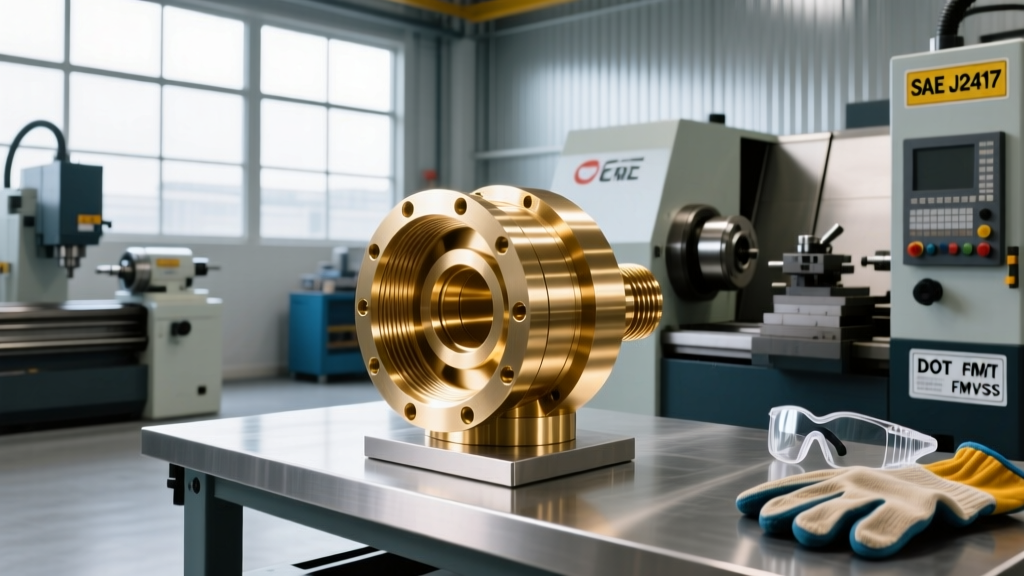
The automotive aftermarket relies heavily on brass CNC machining parts for high-flow fuel rails, brake bleeder valves, and AN hose fittings due to the material's excellent thermal conductivity, corrosion resistance, and aesthetic appeal. However, transitioning a component from a 'show car' accessory to a street-legal or track-homologated part requires strict adherence to material safety standards. The baseline alloy for most machine shops is C36000 (Free-Cutting Brass), prized for its 100% machinability index rating and raw stock cost of approximately $4.50 to $6.00 per pound in 2026.
Despite its machining advantages, C36000 contains 2.5% to 3.7% lead to facilitate chip breaking. For aftermarket parts exported to the European Union or California, compliance with RoHS and REACH directives mandates strict limits on lead leaching. Consequently, high-end aftermarket manufacturers are increasingly pivoting to C69300 (Lead-Free Brass) or C89833 (Bismuth-substituted Brass). While C69300 eliminates the leaching risk, it reduces the machinability index to 80% and increases raw material costs to $8.50–$11.00 per pound, requiring shops to adjust feed rates and invest in specialized carbide inserts to maintain surface finishes.
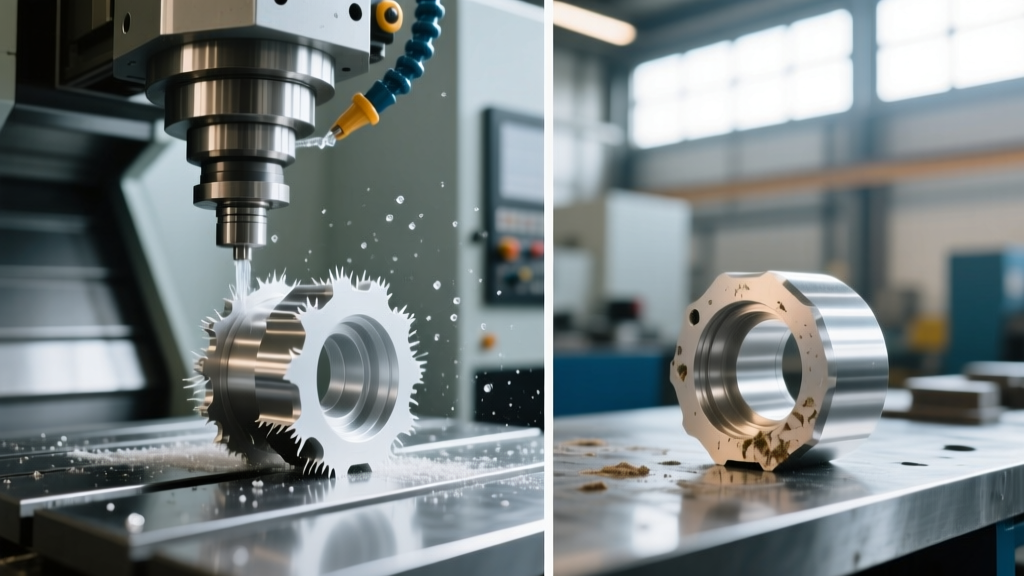
WARNING: Season Cracking and Ammonia ExposureA critical, often overlooked failure mode in brass CNC parts is 'season cracking' (stress corrosion cracking). This occurs when residual tensile stresses from the machining process interact with trace amounts of ammonia. Ammonia is frequently present in degraded, water-soluble cutting fluids used in CNC lathes. To prevent catastrophic cracking in high-pressure fuel fittings, shops must either use non-amine synthetic coolants or perform a stress-relief annealing cycle at 500°F–550°F for one hour post-machining.
Dimensional Standards for High-Pressure Fittings
In the automotive aftermarket, fluid transfer systems operate under extreme thermal cycling and vibration. The dimensional accuracy of brass CNC machining parts is governed by stringent aerospace and automotive derivatives, most notably the 37-degree flare standard.
The 37-Degree Flare vs. O-Ring Boss (ORB)
AN (Army-Navy) fittings, standardized under SAE AS33514, utilize a 37-degree flared seating surface. For a brass AN-8 or AN-16 fitting to seal reliably at working pressures up to 1,500 PSI, the CNC lathe must hold the flare angle to within ±0.5 degrees and the surface finish to Ra 32 microinches or better. Any chatter marks or tool deflection on the flare face will result in micro-leaks under hood temperatures exceeding 250°F.
Conversely, O-Ring Boss (ORB) ports, governed by SAE J1926, rely on a machined O-ring groove rather than metal-to-metal seating. The groove width and depth tolerances for ORB fittings are typically held to ±0.0005 inches. CMM (Coordinate Measuring Machine) validation is mandatory for production runs exceeding 500 units to ensure the minor diameter of the internal threads does not exceed the Go/No-Go gauge limits, which could strip the mating aluminum block threads.
Regulatory Frameworks by Automotive System
Manufacturers must align their machining and testing protocols with the specific regulatory body governing the vehicle system. According to the NHTSA FMVSS guidelines, brake system components must withstand rigorous hydraulic pressure cycling without deformation.
| Application | Preferred Alloy | Governing Standard | Mandatory Testing |
|---|---|---|---|
| Fuel Rail Adapters | C36000 / C46400 | SAE J2299 / EPA EVAP | Hydrostatic burst to 3x working pressure |
| Brake Bleeder Valves | C46400 (Naval) | FMVSS 105 / SAE J514 | Torque-yield and salt spray (ASTM B117) |
| Coolant Water Necks | C69300 (Lead-Free) | SAE J20 / REACH | Thermal shock cycling (-40°F to 280°F) |
| Suspension Bushings | C93200 (SAE 660) | OEM Spec / SAE J1455 | Radial load deflection testing |
For brake applications, C46400 (Naval Brass) is heavily specified. The addition of 1% tin provides exceptional dezincification resistance, ensuring the valve does not become porous when exposed to hygroscopic DOT 4 or DOT 5.1 brake fluids over a 10-year lifespan.
Machining Process Controls and Failure Prevention
Achieving compliance is not solely a design challenge; it is fundamentally a process control challenge on the shop floor. The SAE International standards database frequently highlights that fluid system failures originate from improper thread generation and poor surface finishing. To mitigate these risks, contract machine shops must implement the following protocols:
- Thread Milling over Tapping: For internal ORB ports in brass, CNC thread milling using solid carbide multi-flute cutters eliminates the risk of tap breakage and ensures superior thread concentricity compared to traditional rigid tapping.
- Deburring and Edge Break: Automated thermal deburring or cryogenic tumbling is required to remove microscopic brass burrs. A single 0.002-inch brass chip dislodged in a fuel rail adapter can clog a high-flow fuel injector, leading to a lean condition and catastrophic engine failure.
- Passivation and Coating: While brass is naturally corrosion-resistant, aftermarket parts exposed to road salts require a clear ceramic nano-coating or a specialized chromate conversion coating to pass 96-hour ASTM B117 salt spray tests without tarnishing.
'In high-performance fluid systems, the sealing surface is only as reliable as the coolant management program that produced it. Degraded amine-based coolants are the silent killers of brass pressure fittings.' — Metallurgical Quality Assurance Board, 2025 Industry Report
Supplier Audit Checklist for 2026 Compliance
Automotive aftermarket brands outsourcing their brass CNC machining parts must rigorously audit their machine shop partners. Use this checklist to verify safety and compliance readiness before signing a production PO:
- Material Traceability: Does the shop provide certified Mill Test Reports (MTRs) for every batch, verifying the exact lead and zinc percentages to ensure alloy purity?
- Calibration Records: Are CMM machines and Go/No-Go thread gauges calibrated to NIST-traceable standards within the last 6 months?
- Coolant Maintenance Logs: Can the shop prove regular tramp oil skimming and pH/amine testing to prevent stress corrosion cracking?
- Hydrostatic Test Fixtures: Does the facility possess in-house hydrostatic burst testing rigs capable of safely containing 5,000 PSI fluid pressure for batch validation?
- PPAP Capability: Is the shop equipped to deliver Level 3 Production Part Approval Process (PPAP) documentation, including dimensional results and process flow diagrams?
By enforcing these material, dimensional, and procedural standards, aftermarket manufacturers can ensure their brass components deliver both the visual appeal enthusiasts demand and the life-safety reliability required on public roads and professional race circuits. For further material specifications, shops and engineers should consult the Copper Development Association for the most current metallurgical data sheets and application guidelines.