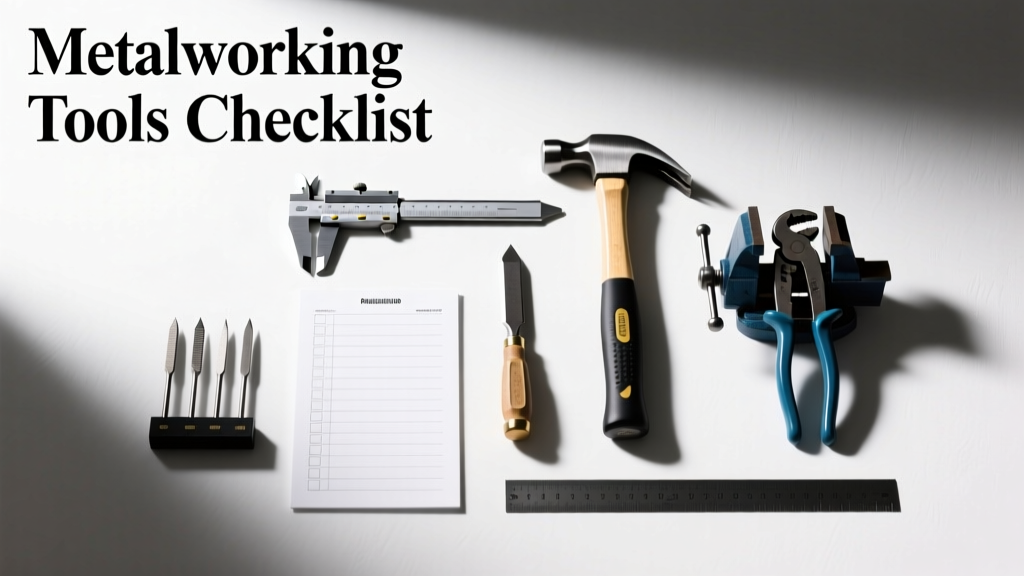
Hydraulic Tools Checklist for CNC Router Shops
A practical hydraulic tools checklist for CNC router shops covering pumps, hoses, cylinders, valves, filtration, pressure controls, and repeatable maintenance intervals.
A hydraulic tools checklist is the fastest way to stop leaks, pressure loss, and sudden failures on a CNC router shop floor. It covers pumps, reservoirs, hoses, fittings, cylinders, valves, relief settings, gauges, filters, fluid viscosity, and safety lockouts. Use it to inspect Enerpac cylinders, Bosch Rexroth power units, Parker valves, Hi-Con couplers, and other components before they cause downtime. This article gives practical intervals, pressure and flow targets, contamination notes, and a table you can adapt for daily, weekly, and monthly checks. It is written for machine builders, integrators, and shop owners who need reliable hydraulic workholding and cutting support.
Why a Hydraulic Tools Checklist Matters on a CNC Router
A CNC router may cut wood, plastic, aluminum, or composite panels, but the hydraulic side often controls clamps, vises, vacuum table support, rotary axis braking, material feed, and tool-change locks. When pressure drops or a hose fails, the machine can still have a healthy spindle while the workpiece moves. That is dangerous and expensive. A checklist turns vague maintenance into repeatable checks, so you catch a weeping fitting before it sprays a $6,000 spindle or a $1,200 vacuum pump.
Hydraulic tools checklist also protects productivity. In a busy shop, one 12-hour job can depend on a 2,500 psi clamp circuit holding 8,000 lbf. A slow leak may not look serious at 9 p.m., but by 3 a.m. the pressure can fall to 1,800 psi, the part shifts, and the cut becomes scrap. The checklist gives your team a simple stop/go rule.
Many shops treat hydraulics as black magic because the power unit is behind a guard or in another room. It is not black magic. It is a system of controlled energy. Pressure, flow, temperature, filtration, and leak integrity can all be measured. If you measure them, you can manage them.
Core Components to Inspect on Every Hydraulic Power Unit
Start with the power unit. Most CNC router hydraulic power packs use a gear pump, vane pump, or piston pump driven by an electric motor. Parker Hannifin, Bosch Rexroth, Vickers, Sta-Rite, and Enerpac appear in many integrator packages. The exact brand matters less than knowing the pump type and service interval. Gear pumps tolerate dirt better but generate more heat. Piston pumps run cooler and more efficient but need cleaner oil.
Pump, Motor, and Reservoir Basics
Check the motor alignment, coupling condition, and mounting bolts. A loose pump mounting can cause cavitation, noise, and premature seal failure. Listen for a low growl that changes with system pressure. That often means air in oil, a clogged suction line, or a pump starting to wear. A 10 horsepower pump running at 1,750 rpm and 2,500 psi can heat oil enough to thin it if the reservoir has no cooling.
Inspect reservoir vents, breathers, and level sight glasses. The reservoir should be clean, dry, and at the correct level. A blocked breather can create a vacuum, starving the pump. A wet breather may indicate condensation or water ingress. Use a dip stick or sight glass to verify the oil level at operating temperature, not cold, if the manufacturer specifies a hot level.
- Pump noise and vibration: note any change from normal.
- Coupling condition: look for cracked elastomers or metal-to-metal contact.
- Reservoir level: check between minimum and maximum marks.
- Breather filter: inspect for moisture, dust, or blockage.
- Mounting bolts: torque loose brackets before running the system.
Hoses, Fittings, and Quick Couplers: The Leak-Prone Path
Hoses and fittings are the most common failure point in shop hydraulics. A 1/2 inch EN 853 2-wire hose may be rated for 3,000 psi, but abrasion against a cabinet edge can reduce its life dramatically. Look for chafing, bulging, cracked covers, and oil seepage at the fitting. A weeping fitting can be harmless until the cover is stripped and the wire reinforcement corrodes.
Quick couplers such as Hi-Con, SKF, and similar brands are convenient for tooling changes, but they trap dirt when uncoupled. If a coupler body is worn, the seal may leak at 2,000 psi. If a hose is left open, airborne chips and coolant mist can enter the line. In a router shop, dust from MDF or plastic can be especially nasty because it turns into a paste when mixed with oil.
- Inspect hose routing for pinch points, tight bends, and abrasion.
- Check minimum bend radius; 1/2 inch hose usually needs at least 3 inches.
- Verify fitting type: JIC 37-degree, NPT, BSP, ORFS, or metric.
- Look for cross-threading, cracked flats, and missing seal washers.
- Clean couplers before disconnecting and cap ports immediately.
- Replace hoses with cracked covers or exposed wire reinforcement.
Cylinders, Valves, and Work-Holding Hardware
Cylinders do the physical work. A 2 inch bore clamp cylinder at 2,500 psi can produce about 7,850 lbf of holding force, assuming 100 percent efficiency and a solid cap end. If the rod seal weeps, the cylinder may still move, but the clamp loses force. Inspect rods for pitting, nicks, and rust. Even a small nick can destroy a wiper seal and allow contamination into the gland.
Valves are the brain of the hydraulic circuit. Directional control valves from Bosch Rexroth, Parker, Sun Hydraulics, and Bosch Rexroth line are common. Check coil voltage, pilot pressure, and manual override function. A valve that shifts slowly can cause jerky clamp motion, pressure spikes, and poor repeatability. If the valve has a load-sensing port, inspect the small tubing for kinks and blockage.
Workholding Pressure and Holding Force
Measure clamp pressure with a gauge at the cylinder port, not only at the pump. A relief setting at the pump does not guarantee pressure at the workholding device. Hose pressure drop, valve leakage, and internal cylinder bypass can reduce effective force. For critical clamping, verify that the holding force meets the cutting load. A rough rule is to design for at least 1.5 times the expected cutting force.
If your CNC router uses hydraulic vises, tailstock brakes, or rotary axis locks, test the system under cold start and warm conditions. A cold system may show correct pressure, but as the oil warms and thins, internal leakage can increase. This is especially true with worn piston pumps or aged valve spools. A simple warm-up cycle with pressure checks can prevent a mid-job failure.
Fluid Condition and Filtration: The Hidden Cost of Contamination
Hydraulic fluid is both lubricant and power transfer medium. Most CNC router hydraulic systems use ISO VG 32, ISO VG 46, or ISO VG 68 fluid, depending on pump design and climate. At 40 degrees Celsius, ISO VG 46 has about 46 centistokes viscosity. If the oil gets too hot, viscosity drops, and clearances open up, causing internal leakage. If it gets too cold, the pump may cavitate or the valve may shift slowly.
Viscosity, Temperature, and Contamination
Check fluid temperature regularly. A normal working range is often 120 to 150 degrees Fahrenheit, but some piston systems prefer 100 to 130 degrees Fahrenheit. Sustained operation above 180 degrees Fahrenheit accelerates seal damage and fluid oxidation. If your reservoir has a heat exchanger, inspect the coolant side for scale and the oil side for clogging. Air-cooled aftercoolers need clean fins; a dust-caked cooler loses its ability to reject heat.
Filtration is where many shops save too much money. A pressure-line filter rated at 10 microns may be fine for a vane pump, but a piston pump can require 5 microns absolute or better. Use ISO 4406 cleanliness targets if your manufacturer specifies them. A typical target for piston systems may be 16/13/10 or 14/11/8. That means particles are counted at 4, 6, and 14 microns. If you do not know the target, start with a filter upgrade and fluid analysis.
Water contamination is common in humid shops. Water can come from condensation, a leaking cooler, or cleaning with water-based coolant mist. It causes rust, reduces lubricity, and promotes sludge. Use a sight water drain at the reservoir bottom. If the oil looks cloudy, suspect water. If it looks milky and stable, it may be air or contamination. A lab test can quantify water content; many systems should stay below 0.1 percent water by volume, and below 0.05 percent for sensitive piston pumps.
Safety and Pressure Controls: Relief Valves, Gauges, and Lockouts
Hydraulic tools checklist must include safety devices. A relief valve is your last line of defense against overpressure. If it is set wrong, the system may leak, overheat, or rupture a hose. If it is stuck closed, a pump can generate extreme pressure during a stall. Use a calibrated gauge and follow the manufacturer setting. For a 2,500 psi clamp circuit, the relief may be set at 3,000 to 3,500 psi, but never exceed component ratings.
Relief Valves, Gauges, and Lockout
Inspect gauges for cracked lenses, zero drift, and leaking bourdon tubes. A gauge with a 0 to 5,000 psi scale is not ideal for checking a 2,500 psi clamp; use a 0 to 3,000 psi gauge for better resolution. Calibration matters. A gauge that reads 10 percent high can hide a real problem. Replace damaged gauges and install snubbers where vibration is severe.
Lockout/tagout is part of hydraulic maintenance. A hose may look depressurized, but trapped oil in a cylinder or accumulator can still move a clamp. If your system has an accumulator, verify pressure before opening any line. Use a hydraulic-safe procedure: stop pump, block motion, relieve pressure, verify zero, then disconnect. Never place a hand near a suspected leak because high-pressure oil can inject into skin.
Building a Repeatable Hydraulic Tools Checklist for Your Shop Floor
The best checklist is short enough to be used and specific enough to be useful. Daily checks should catch obvious leaks, low oil, and strange noise. Weekly checks should look at hose routing, coupler cleanliness, and pressure readings. Monthly checks should include fluid temperature, filter condition, valve operation, and torque checks on fittings. Quarterly checks can include pump noise analysis, fluid sampling, and relief valve verification.
| Item | Frequency | Target | Accept Criteria |
|---|---|---|---|
| Reservoir oil level | Daily | Between sight glass marks | No cavitation or foaming |
| Visible leaks | Daily | Zero active leaks | No drip, mist, or wet spot |
| Pump noise | Daily | Consistent with baseline | No growl or cavitation |
| Hose condition | Weekly | No abrasion or bulging | Reinforcement not exposed |
| Quick couplers | Weekly | Clean and capped | No weeping at 2,000 psi |
| Clamp pressure | Weekly | Design setting plus 10 percent | Stable under load |
| Oil temperature | Weekly | 120 to 150 degrees Fahrenheit | No sustained rise above 180 |
| Filter indicator | Monthly | Green or below alarm | Replace if red or clogged |
| Relief valve setting | Quarterly | Manufacturer value | Within plus or minus 5 percent |
| Fluid analysis | Quarterly or yearly | ISO 4406 target | Water below 0.1 percent |
Use a clipboard or a simple tablet form, but keep the same wording. If one operator says the pump sounds normal and another says it sounds like gravel, you need a baseline. Record noise level, temperature, pressure, and filter status. Over time, those notes reveal trends that a visual check cannot. A 10 degree Fahrenheit temperature rise after a new hose replacement may point to internal valve leakage.
A hydraulic tools checklist should also include emergency response. If a hose bursts, shut down the pump, isolate the circuit, and clean oil chips before they enter another system. Have absorbent pads, a waste oil container, and spare hose fittings in a marked kit. If you use 1/2 inch hose, keep 1/2 inch JIC fittings and NPT adapters on hand, but confirm thread type before buying replacements.
When to Replace, Repair, or Call a Specialist
Not every problem is a shop fix. If a piston pump has internal metal particles, a clogged suction line, or a failed bearing, replace or rebuild it with the correct kit. A gear pump can sometimes survive with a new seal and shaft coupling, but a noisy Bosch Rexroth piston pump usually needs professional inspection. Do not keep running a pump that is shedding metal because contamination spreads to valves, cylinders, and filters.
Hose replacement is cheap compared to a fire, injury, or scrapped part. If a hose has more than one exposed wire, a kink that shows permanent set, or a fitting that leaks after reseating, replace it. Use the correct pressure rating and temperature rating. A 3,000 psi hose with a 250 degree Fahrenheit elastomer may be fine in a shop, but do not mix incompatible fluids without checking seal material. Nitrile seals are common, but water-glycol and ester fluids can require different seals.
Call a specialist when pressure problems are intermittent, when relief valves cannot be set correctly, or when contamination returns after several filter changes. A fluid sample can tell you whether you have water, particles, or viscosity drift. A pump performance test can confirm whether the pump is actually delivering rated flow at rated pressure. For example, a pump rated for 8 gallons per minute at 2,500 psi should not show a large pressure drop at normal temperature.
Keep this article near your maintenance station. A hydraulic tools checklist is not paperwork for its own sake. It is the habit that prevents a small leak from becoming a shutdown, a dirty coupler from becoming a valve failure, and a hot oil tank from becoming a lost day of production. When you inspect pumps, hoses, cylinders, valves, filters, and safety devices with clear targets, your CNC router shop runs safer, cleaner, and more predictably.
Related reading
Best CNC Milling for Precision Components: Machine Selection, Tooling, and Process Optimization
Axis Alternatives to Preventive Maintenance: When Proactive Isn’t Practical for CNC Routers