2 Axis CNC Milling Machine Costs: 2026 Budget Breakdown
Analyze 2026 capital and operational costs for 2 axis CNC milling machines. Compare entry-level to industrial setups, tooling, and ROI frameworks.
The Financial Reality of Strict 2-Axis Milling
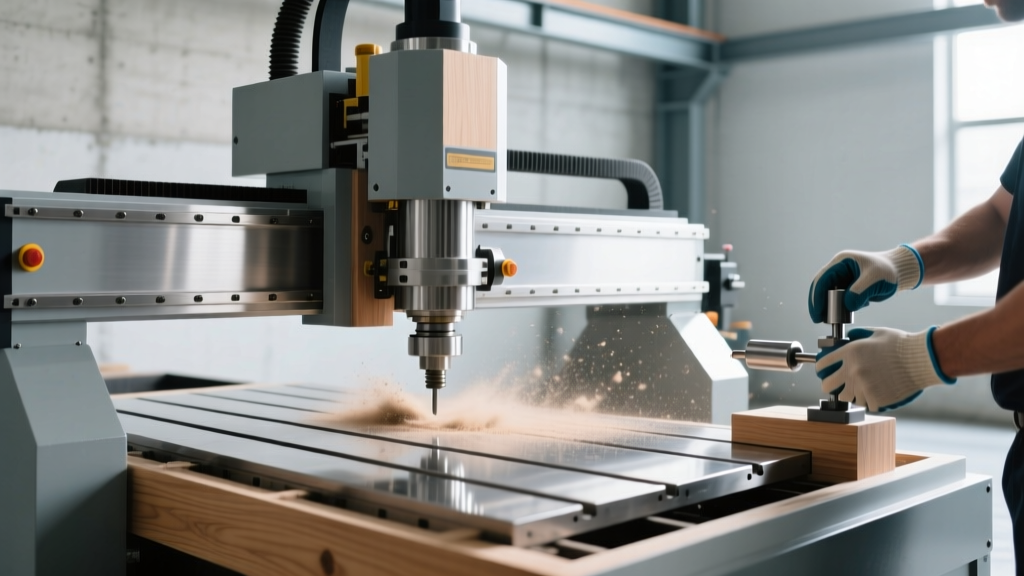
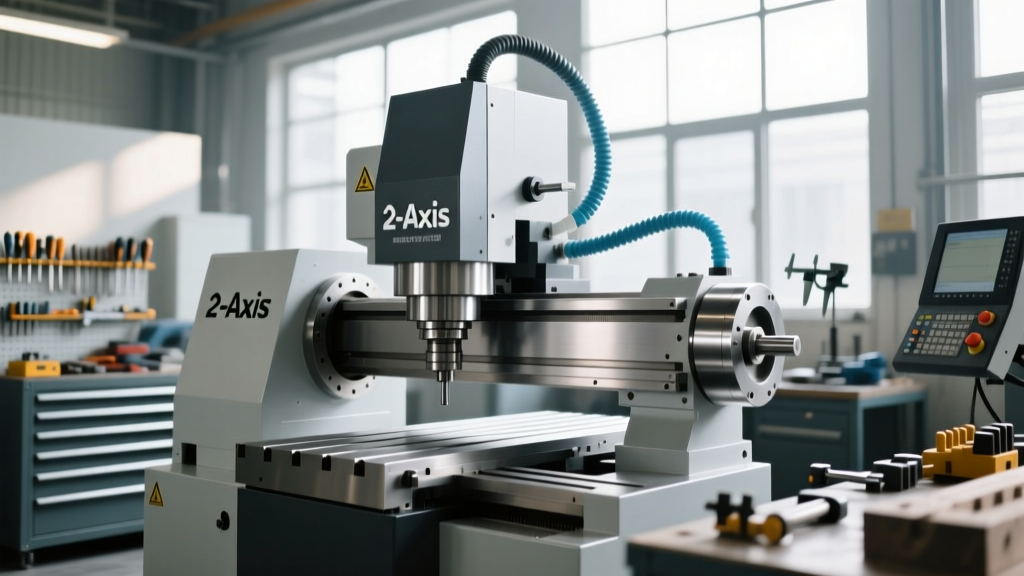
Procuring a 2 axis CNC milling machine requires navigating a market saturated with misclassified equipment. In industrial manufacturing, a true 2-axis system restricts programmable, servo-driven motion exclusively to the X and Y planes. The Z-axis is either entirely absent, manually adjusted via a handwheel, or locked in a fixed position. These machines are engineered for high-speed 2D profiling, gasket cutting, PCB isolation milling, and thin-sheet nesting where depth-pass automation is unnecessary or handled via specialized fixed-depth tooling.
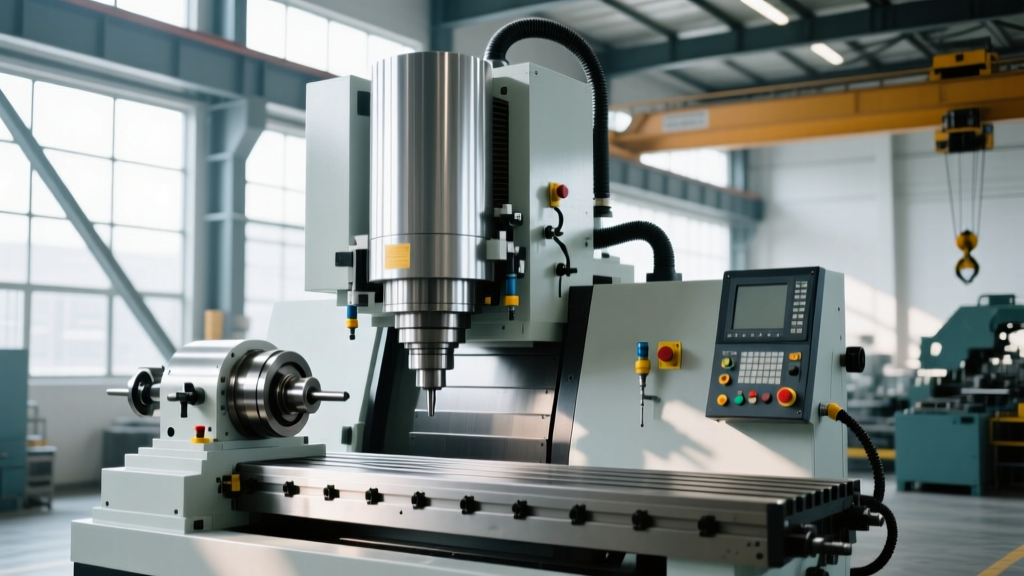
Budgeting for a 2-axis mill in 2026 is fundamentally different from pricing a 3-axis vertical machining center (VMC). The capital expenditure (CapEx) shifts away from heavy cast-iron enclosures and automated tool changers (ATCs), redirecting funds toward high-precision linear motion, specialized vacuum workholding, and high-RPM spindles. Below is a comprehensive cost analysis for shop owners and procurement engineers planning a 2-axis CNC integration.
⚠ Expert Warning: The "Hidden Z-Axis" Trap in QuotingMany OEMs market "2-axis profiling mills" that actually include a manual or gas-strut assisted Z-axis. If your application requires automated depth-passes (e.g., cutting 12mm 6061-T6 aluminum in 3mm passes), you are technically buying a 2.5-axis machine. Budgeting for a true 2-axis machine assumes you are cutting completely through the material in a single pass or using pre-scored/layered stock. Misidentifying this requirement will result in severe tooling breakage and scrapped parts.
Capital Expenditure (CapEx): Machine Base & Controller Tiers
The base cost of a 2 axis CNC milling machine varies wildly based on the drive mechanics and positional accuracy required. Belt-driven systems are relegated to hobbyist or light-duty signage work, while industrial applications demand rack-and-pinion or precision ball-screw drives paired with linear guideways.
| Tier / Application | Drive & Guidance System | Spindle Specification | Estimated 2026 Price |
|---|---|---|---|
| Entry-Level / Proto (e.g., Shapeoko 5, X-Carve) |
V-Wheels & Belt/GT3 Drives | 800W Air-Cooled Router (ER11) | $2,500 - $4,500 |
| Industrial Profiling (e.g., ShopBot, AXYZ) |
Helical Rack-and-Pinion & Linear Rails | 3.0kW HSD Air-Cooled (ER20/ER25) | $14,000 - $26,000 |
| Precision Metrology / Stage (e.g., Aerotech, Parker) |
Linear Motors & Air Bearings | High-Freq Air Turbine (100k+ RPM) | $55,000 - $120,000+ |
For standard manufacturing environments cutting non-ferrous metals, plastics, and composites, the Industrial Profiling tier is the baseline. According to procurement frameworks outlined by the NIST Manufacturing Extension Partnership (MEP), mid-tier equipment investments must also factor in a 15-20% contingency for freight, rigging, and initial calibration.
Workholding: The Variable Capital Sink
In 2-axis milling, you cannot rely on standard vise clamping for full-sheet nesting, as the clamps would interfere with the 2D toolpath. Therefore, vacuum workholding is not a luxury; it is a mandatory operational requirement.
- Phenolic Vacuum Table & Grid: A machined phenolic spoilboard with a 1-inch grid and O-ring seals costs approximately $3,500 to $6,000 depending on the bed size (e.g., 4x8 foot).
- Regenerative Blower: A 2.2kW to 4.0kW regenerative vacuum pump capable of generating 100+ CFM is required to hold down thin materials like 0.5mm Garolite (G10) or 1/16-inch aluminum sheet against cutting forces. Expect to budget $2,800 to $4,500 for a reliable industrial blower (e.g., Travaini or FPZ).
- Spoilboard Surfacing: Budget for a 2-inch diameter face mill and replacement MDF/phenolic sheets, costing roughly $400 annually in consumable surfacing materials.
Electrical and Facility Requirements
Industrial 2-axis mills and their accompanying vacuum pumps typically require 3-phase power (208V or 480V). If your facility only has single-phase power, budget an additional $1,500 to $3,000 for a rotary phase converter or a high-capacity Variable Frequency Drive (VFD) to run the 3-phase vacuum pump and spindle motor.
Tooling and Consumables: Micro-Milling vs. Macro-Profiling
Tooling costs for a 2 axis CNC milling machine depend entirely on the tolerance requirements. Standard 2D routing utilizes 1/4-inch or 1/2-inch shank solid carbide end mills. However, applications like PCB isolation milling or micro-gasket cutting require specialized miniature tooling.
Tooling Cost Matrix (Per Unit / Expected Lifespan)
- 1/4" Solid Carbide Upcut (Standard Aluminum/Plastic): $28 per bit | Lifespan: 4-6 hours in 6061-T6
- 60-Degree Carbide V-Bit (Engraving/Scoring): $35 per bit | Lifespan: 10+ hours in Delrin/Acetal
- 0.010" Micro End Mill (PCB Copper Traces): $32 per bit | Lifespan: 45 minutes (High breakage risk)
Source reference: For detailed feeds, speeds, and micro-tooling deflection limits, consult the Harvey Tool Technical Expertise Hub.
When budgeting for micro-tooling on a 2-axis machine, you must account for a 15% to 20% breakage rate due to the lack of Z-axis retraction optimization during rapid X-Y moves. Always purchase tooling in 10-packs and factor the breakage rate directly into your per-part cost analysis.
Software Licensing and Post-Processor Costs
Strict 2-axis G-code generation requires CAM software capable of locking the Z-axis commands (G17 plane selection without Z-word outputs). While basic 2D profiling can be handled by entry-level software, complex nesting and tab-generation require commercial licenses.
- Entry-Level (2D Only): Carbide Create or Easel (Free to $300/year). Suitable for basic DXF imports and simple profiles.
- Mid-Tier Commercial: Vectric VCarve Pro (Approx. $350 - $450 one-time). Excellent for 2D nesting, tab creation, and vacuum zone management.
- Enterprise/Advanced: Mastercam Mill Entry or Fusion 360 Commercial (Approx. $545 - $1,800/year). Required if you are importing complex 3D CAD models and flattening them into strict 2D boundary extrusions for the mill.
Note: Do not forget to budget $500 - $1,000 for a custom post-processor if your OEM controller (e.g., Siemens Sinumerik or Fanuc) requires specific 2-axis formatting that the standard CAM software does not natively support.
Operational Expenditure (OpEx): Maintenance & Downtime
The Society of Manufacturing Engineers (SME) frequently highlights that machine downtime is the largest hidden cost in CNC operations. For 2-axis machines, maintenance is concentrated on the X-Y drive mechanics and the spindle bearings.
- Spindle Rebuilds: Air-cooled HSD spindles running at 18,000 RPM require bearing replacements every 2,000 to 3,000 hours. Budget $1,200 to $1,800 per rebuild.
- Linear Rail Lubrication: Automated grease distribution systems add $800 to the initial CapEx but reduce manual maintenance labor by 90%. Manual greasing requires 15 minutes per week of operator downtime.
- Collet Fatigue: ER20 and ER25 collets lose clamping force after 400 hours of high-vibration use. Replace the master collet set annually ($250).
ROI Decision Matrix: When to Buy 2-Axis vs. 3-Axis
Before finalizing your 2026 procurement budget, use this decision framework to ensure a 2-axis machine is the correct financial choice over a standard 3-axis VMC or router.
| Application Scenario | 2-Axis ROI | 3-Axis ROI | Financial Justification |
|---|---|---|---|
| Full-Sheet Gasket Cutting (Non-Asbestos) | HIGH | LOW | Vacuum table utilization is maximized; Z-axis automation is unnecessary for 2mm stock. |
| PCB Isolation Milling & Drilling | HIGH | MED | Requires high-RPM air spindles and micro-tooling; 3-axis VMCs are too slow and lack RPM. |
| Aluminum Enclosure Pocketing | LOW | HIGH | Pocketing requires Z-axis depth control. A 2-axis machine cannot perform this operation. |
| Decorative 2D Signage (Wood/Acrylic) | MED | MED | 2-axis is cheaper, but 3-axis allows for V-carving and 3D relief, expanding market offerings. |
Final Budgeting Checklist for 2026 Procurement
When submitting your capital request for a 2 axis CNC milling machine, ensure your spreadsheet includes the following line items to avoid mid-quarter budget shortfalls:
- Base Machine Cost (including OEM controller and servos)
- Freight, Rigging, and Forklift Rental (Est. $1,500 - $3,000)
- 3-Phase Power Conversion or VFD Setup
- Regenerative Vacuum Pump & Phenolic Bed Surfacing
- Dust Collection System (Minimum 1,500 CFM for aluminum/plastic chips)
- Commercial CAM Software License & Custom Post-Processor
- Initial Tooling Inventory (including 20% overage for micro-tool breakage)
By accurately forecasting the unique requirements of 2-axis profiling, manufacturing facilities can deploy highly efficient, low-overhead systems that outperform generalized 3-axis machines in specific high-volume, flat-stock applications.