Budgeting an Automotive CNC Machine for Stainless Steel
Analyze the true costs of running an automotive CNC machine for stainless steel parts. Learn budget planning, tooling expenses, and ROI strategies.
The Financial Reality of Machining Automotive Stainless Steel
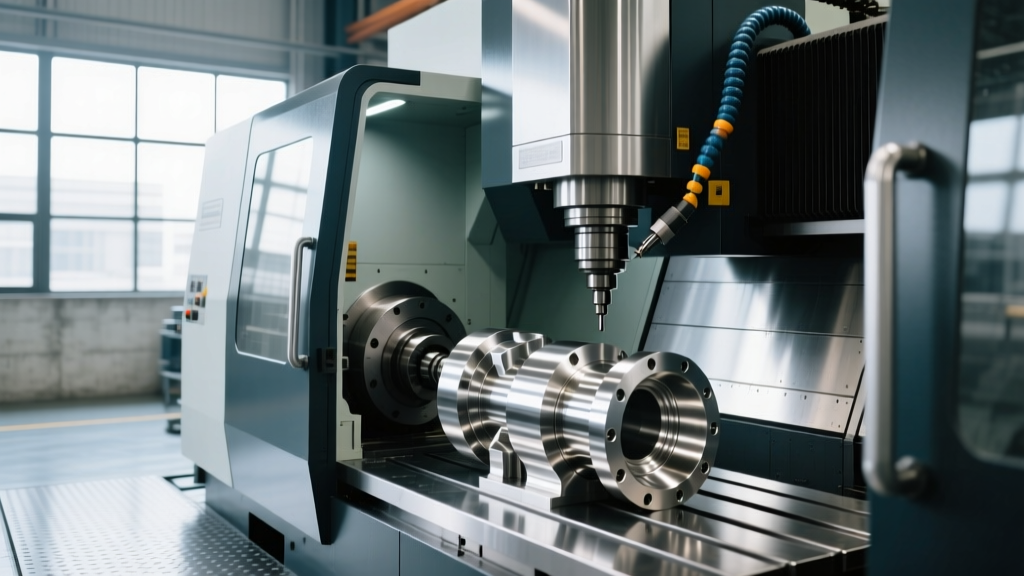
Machining 304 and 316L stainless steel for automotive applications—such as EV battery thermal management plates, high-pressure fuel injection rails, and structural suspension nodes—demands extreme machine rigidity and advanced thermal management. When budgeting for an automotive CNC machine dedicated to these alloys, looking past the base equipment price is mandatory. The total cost of ownership (TCO) is heavily skewed by operational expenditures (OpEx) driven by work hardening, accelerated tool wear, and high-pressure coolant requirements. In 2026, with tighter tolerances on EV structural components, the margin for error in budget planning has effectively vanished.
Capital Expenditure (CapEx) Matrix: Machine Selection
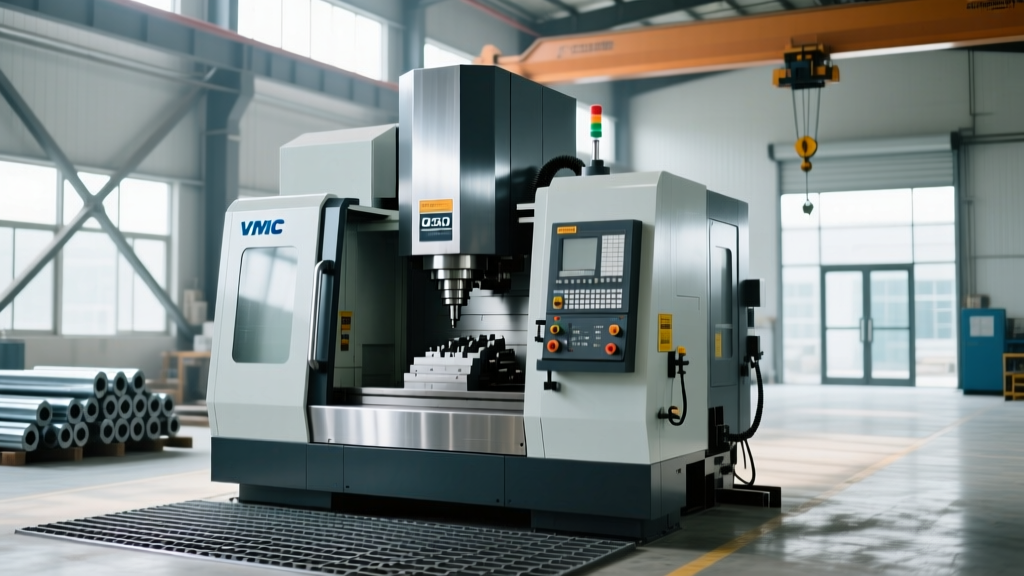
Selecting the right platform requires matching the machine's torque curve and spindle interface to the radial forces generated by stainless steel. A standard 40-taper spindle will deflect under heavy roughing loads in 316L, leading to chatter and scrapped parts. Below is a comparative budget matrix for three machine classes commonly deployed in automotive stainless manufacturing.
| Machine Model | Class / Taper | Base Price (2026 Est.) | High-Pressure Coolant Add-on | Total CapEx Target |
|---|---|---|---|---|
| Haas VF-4SS | Vertical / CAT40 | $145,000 | $15,995 (1000 PSI) | $160,995 |
| Okuma GENOS M560-V | Vertical / CAT40 | $185,000 | $18,500 (1500 PSI) | $203,500 |
| Mazak VARIAXIS i-600 | 5-Axis / HSK-A63 | $365,000 | $24,000 (ChipBLASTER 3000 PSI) | $389,000 |
For 5-axis automotive work, the HSK-A63 tooling interface is non-negotiable for stainless steel. Unlike CAT40, HSK provides simultaneous face-and-taper contact, preventing tool pullout during heavy radial cuts. Budget an additional $12,000 to $18,000 just for the initial HSK toolholder inventory, as they cost roughly 40% more than standard V-flange holders.
Operational Expenditure (OpEx): The Stainless Tax
Stainless steel alloys possess notoriously low thermal conductivity. While 6061 aluminum dissipates heat at roughly 167 W/m·K, 304 stainless steel manages only about 15 W/m·K. This means the heat generated at the shear zone does not dissipate into the chip; it transfers directly into the cutting tool and the workpiece. This metallurgical reality triggers three major OpEx cost centers that must be line-itemed in your annual budget.
1. High-Pressure Coolant Infrastructure
Standard flood coolant (300 PSI) is insufficient for deep pocketing or drilling in 316L. The fluid boils instantly upon contact with the cut zone, creating a vapor barrier that accelerates insert failure. To penetrate the shear zone and break stringy stainless chips, you must budget for a minimum of 1,000 PSI coolant delivery, with 3,000 PSI being the modern standard for automotive production cells. According to Sandvik Coromant's material machining guidelines, high-pressure jet delivery can increase tool life in stainless steel by up to 40% while simultaneously improving surface finish, justifying the $20,000+ CapEx premium for the pump system.
2. Specialized Chip Management
Austenitic stainless steels produce long, tough, stringy chips that wrap around spindles and jam standard hinge-belt chip conveyors. Unplanned downtime to manually clear chip nests destroys profitability. When configuring your automotive CNC machine, you must specify a scraper-type conveyor or a specialized auger system designed for stringy materials. Add $8,500 to $14,000 to your initial quote for heavy-duty chip evacuation hardware.
3. Accelerated Spindle Bearing Degradation
The high radial forces required to shear work-hardened stainless steel place immense stress on spindle bearings. Running a 15,000 RPM spindle at maximum load for 8-hour shifts will typically necessitate a spindle rebuild within 3,500 to 4,500 hours. Budget $18,000 to $24,000 per machine for a mid-life spindle rebuild, or spec a lower RPM, high-torque spindle (e.g., 8,100 RPM with a 2-speed gearbox) which trades cycle speed for bearing longevity.
Tooling Amortization and Insert Economics
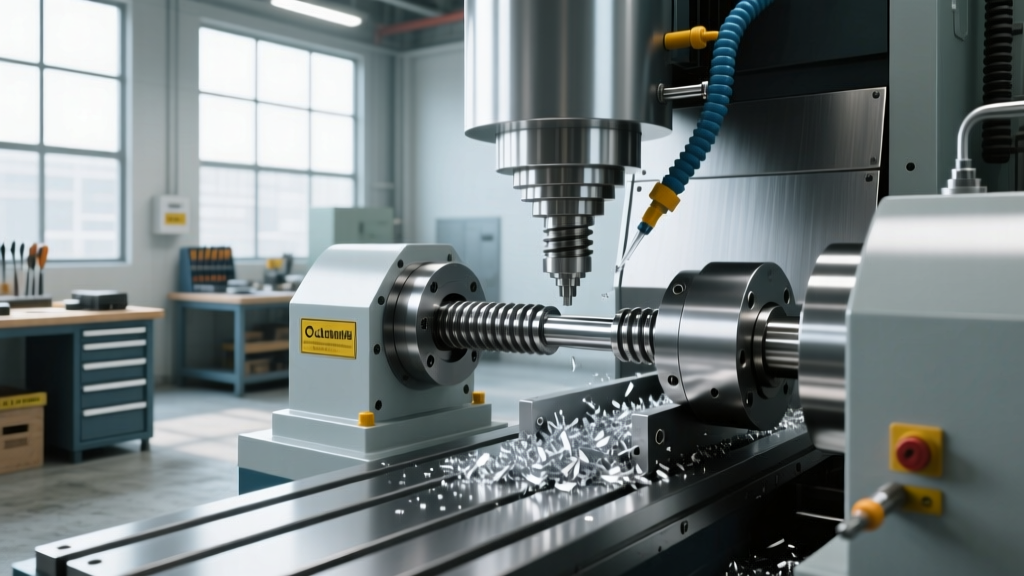
Standard TiAlN-coated endmills used for aluminum or mild steel will fail catastrophically in stainless steel due to built-up edge (BUE) and thermal cratering. You must budget for specialized PVD-coated carbide grades designed specifically for ISO M-group materials.
- Roughing: Indexable helical mills with AlTiN or specialized nano-composite coatings (e.g., Kennametal HARVI III). Budget $18 - $25 per indexable insert.
- Finishing: Solid carbide endmills with variable helix angles to disrupt harmonic chatter. Expect to pay $110 - $160 per tool.
- Drilling: Coolant-through carbide drills are mandatory. Without through-tool coolant, peck drilling is required, tripling the cycle time and doubling the cost per hole.
Industry data tracked by Modern Machine Shop consistently shows that shops failing to track tooling costs by material type underestimate their stainless steel tooling OpEx by an average of 35% compared to aluminum production. A realistic tooling budget for a dedicated stainless automotive cell is $4,500 to $6,000 per month, assuming two shifts of operation.
Cost-Per-Part Framework: EV Battery Cooling Plate
To illustrate the financial modeling required, consider the production of a 316L stainless steel EV battery cooling plate. This part requires deep pocketing for coolant channels and strict flatness tolerances to ensure thermal interface contact.
Unit Economics Breakdown (Per Part)- Raw Material (316L Billet): $145.00 (Stainless pricing remains volatile; hedge with quarterly supplier contracts).
- Machine Time (45 mins @ $120/hr burden rate): $90.00
- Tooling Amortization: $22.50 (Factoring in 15-minute insert change intervals for roughing passes).
- Coolant & Consumables: $8.00 (High-pressure systems consume more tramp oil and require frequent skimming).
- Scrap Allowance (4%): $10.62
- Total True Cost: $276.12
If the automotive OEM contract pays $310.00 per unit, your gross margin is only 10.9%. This highlights why cycle time reduction via 5-axis simultaneous machining or automated pallet pools is critical for survival.
Automation ROI: Pallet Pools and Lights-Out Machining
Because stainless steel cycle times are inherently long due to conservative feeds and speeds (e.g., 350 SFM for roughing 304 with carbide, compared to 1500+ SFM for aluminum), spindle utilization is the primary lever for profitability. Manual loading of heavy stainless steel fixtures yields a spindle uptime of roughly 65%.
Integrating a linear pallet pool (such as the Haas Pallet Pool or Mazak Palletech) increases spindle uptime to 92%. While a 6-pallet automation system adds $110,000 to the initial CapEx, it allows for unattended weekend machining. According to manufacturing efficiency benchmarks outlined by the NIST Manufacturing Extension Partnership (MEP), increasing spindle utilization from 65% to 90% in high-value material machining reduces the cost-per-part by an average of 22%, paying for the automation hardware within 14 to 18 months. When drafting your budget, treat automation not as an optional upgrade, but as a mandatory mechanism to offset the premium costs of stainless steel tooling and machine wear.