What Does CNC Machined Mean? A Buyer's Guide to Quotes
Understand what CNC machined means on supplier quotes. Learn to evaluate RFQs, compare methods, and verify machine capabilities for industrial procurement.
The Technical Definition vs. The Procurement Reality
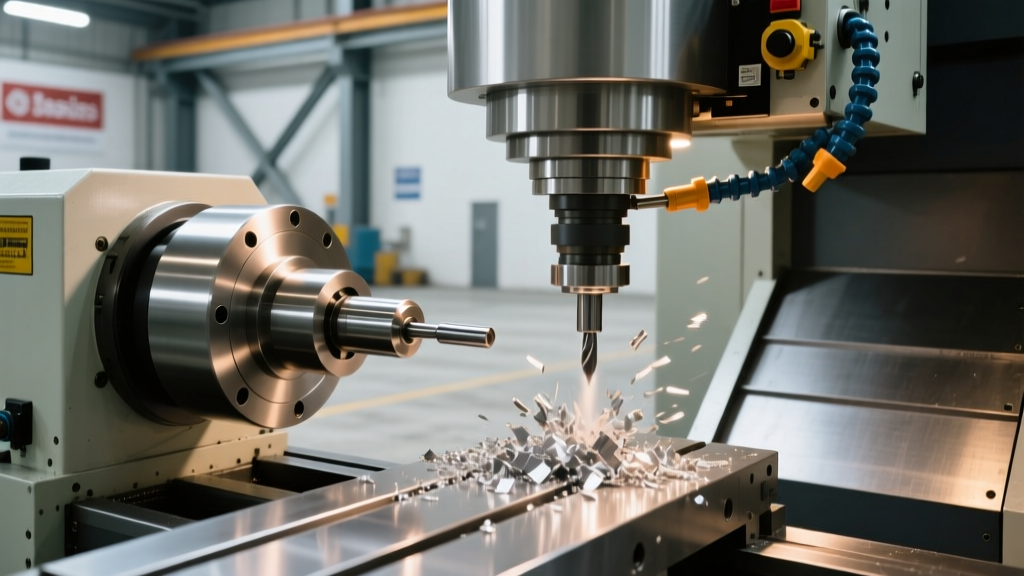
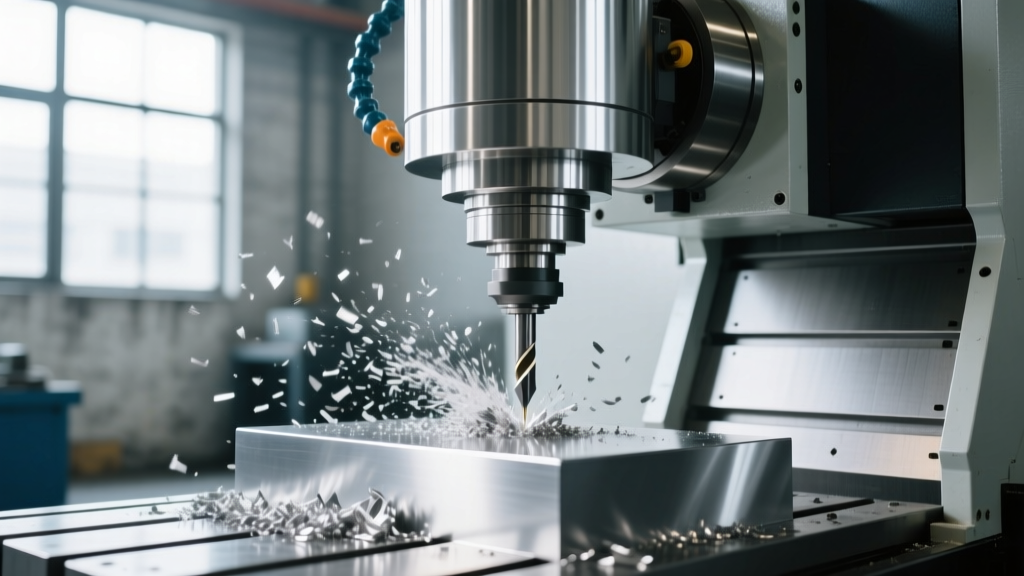
When reviewing a Request for Quote (RFQ) or a supplier capability matrix, you will frequently encounter the term 'CNC machined.' At its core, what does CNC machined mean? Technically, it refers to a subtractive manufacturing process where Computer Numerical Control (CNC) directs machine tools to remove material from a solid block (billet) to achieve a final geometry. However, from an equipment selection and procurement perspective, the term means much more.
For a buyer, 'CNC machined' is a guarantee of specific physical properties: high dimensional accuracy, excellent surface finishes, and isotropic material strength. Unlike cast or molded parts, a CNC machined component retains the full structural integrity of the parent material. But because the term is used as a catch-all in the industry, failing to scrutinize how and on what equipment a part will be machined can lead to massive cost overruns, tolerance stack-up failures, and delayed lead times.
⚠️ Procurement Warning: Never accept 'CNC Machined' as a standalone process description on a binding quote. Always require the supplier to specify the exact machining method (e.g., 5-axis simultaneous milling, 2-axis CNC turning) and the proposed equipment class. A part quoted as 'CNC machined' on a 3-axis mill will require multiple manual setups, drastically increasing the risk of concentricity and perpendicularity errors compared to a 5-axis trunnion setup.Decoding Supplier Quotes: What the Term Actually Guarantees
When a supplier labels a line item as CNC machined, they are committing to a specific tier of manufacturing capability. According to Sandvik Coromant's machining fundamentals, modern CNC milling and turning centers can hold incredibly tight parameters, but those parameters come at a premium. Here is what you are actually paying for when you specify a CNC machined part:
- Standard Tolerances: ±0.005 inches (0.127 mm) for standard milled features. If your design requires tighter specs, the supplier must utilize precision grinding or secondary operations, which should be itemized separately.
- Precision Tolerances: ±0.0005 inches (0.0127 mm) or tighter. Achieving this requires temperature-controlled environments, high-end spindle runout specifications, and often in-process probing.
- Surface Finish: A standard CNC machined surface yields a 125 Ra (Roughness Average) finish. Specifying a 32 Ra or 16 Ra finish requires slower feed rates, specialized tooling, and significantly more machine time, directly impacting the hourly machining cost.
- Material Certification: True CNC machined parts for industrial use must be accompanied by Mill Test Reports (MTRs) verifying the chemical and physical properties of the raw billet before material removal begins.
Equipment Selection Matrix: Matching the Part to the Machine
The most critical step in evaluating a CNC machining quote is auditing the supplier's proposed equipment list. If a supplier bids on a complex aerospace manifold but plans to use a standard 3-axis Vertical Machining Center (VMC), they will be forced to flip the part multiple times. Each flip introduces a new datum point, compounding tolerance errors.
Use the following matrix to evaluate whether the supplier's equipment aligns with your part's geometric complexity:
| Machine Type | Typical Models (Examples) | Best For | Procurement Risk if Misapplied |
|---|---|---|---|
| 3-Axis VMC | Haas VF-2SS, FANUC RoboDrill | Brackets, flat plates, simple housings with top-down features. | High setup costs and tolerance stack-up on multi-sided parts. |
| 4-Axis Indexing | Haas VF-2 with HRT210 rotary | Cylindrical parts with off-center holes, camshafts, helical features. | Cannot machine complex organic contours simultaneously. |
| 5-Axis Simultaneous | DMG MORI DMU 50 3rd Gen, Hermle C 400 | Impellers, turbine blades, complex aerospace manifolds. | Higher hourly rate ($150-$250/hr), but drastically reduces setups. |
| Mill-Turn Center | Mazak INTEGREX i-200, DMG MORI NTX | Highly complex rotational parts with milled flats and cross-holes. | Overkill for simple turned parts; high programming overhead. |
How to Audit a Supplier's Equipment List
Understanding advanced manufacturing standards requires looking past the marketing jargon on a supplier's website. When you receive an RFQ response, cross-reference the part geometry with the equipment they intend to use.
Red Flag 1: The 3-Axis Impeller Bid
If your CAD model features undercuts, compound angles, or deep cavities with complex floor geometries (like a centrifugal impeller), and the supplier quotes the job using a standard 3-axis VMC like a Haas VF-2, reject the bid. They will have to use extended tooling, which causes chatter, poor surface finishes, and requires multiple manual work coordinate system (WCS) shifts. Demand a quote based on a 5-axis trunnion table machine.
Red Flag 2: Ignoring the Buy-to-Fly Ratio
CNC machining is subtractive. The 'buy-to-fly' ratio compares the weight of the raw material purchased to the weight of the final part. For aluminum aerospace components, a 5:1 ratio is common. For complex titanium parts, it can exceed 15:1. If a supplier does not factor the cost of the removed material (chips) and the machine time required to rough out that massive volume into their quote, they will either hit you with a change order later or cut corners on the finishing passes to save time.
Cost Breakdown: Where Your Money Goes
To negotiate effectively, you must understand the cost anatomy of a CNC machined part. A typical quote is broken down into four distinct phases:
- CAM Programming & Setup (15-25% of cost): Creating the toolpaths, designing custom soft jaws for workholding, and setting tool offsets. This is a fixed cost, making CNC machining less economical for high-volume runs (over 10,000 units) compared to die casting.
- Material Procurement (20-40% of cost): Dictated by the buy-to-fly ratio and the base cost of the alloy. 6061-T6 aluminum is a baseline commodity; switching to 7075-T6 or Titanium Ti-6Al-4V will exponentially increase material and tooling wear costs.
- Machine Runtime (30-50% of cost): Calculated by the shop's hourly rate. A standard 3-axis mill might run at $85/hour, while a 5-axis machine with through-spindle coolant and high-pressure chip conveyors will run at $160-$220/hour.
- Quality Assurance & Inspection (10-20% of cost): Verifying 'CNC machined' tolerances requires Coordinate Measuring Machines (CMM) or optical comparators. First Article Inspection Reports (FAIR) per AS9102 standards add significant administrative and metrology time to the initial batch.
Frequently Asked Questions (FAQ)
Is 'CNC machined' the same as 'CNC turned'?
No. While both fall under the CNC umbrella, 'CNC turned' specifically refers to parts made on a lathe where the material rotates and a stationary tool cuts it (ideal for cylindrical parts like shafts and bushings). 'CNC milled' refers to parts where the material is stationary and a rotating tool cuts it. 'CNC machined' is the generic catch-all term that encompasses both, which is why buyers must demand specificity on quotes.
Why would a supplier quote a CNC machined part higher than a 3D printed equivalent?
CNC machining requires expensive raw billets, generates material waste, and demands highly skilled programmers and operators. 3D printing (Additive Manufacturing) uses only the material needed for the part and requires minimal manual setup. However, CNC machined parts offer vastly superior isotropic strength, tighter tolerances, and better surface finishes, justifying the premium for structural and mission-critical applications.
How do I verify if a supplier's CNC equipment is actually capable of my tolerances?
Ask for the machine's repeatability and positioning accuracy specifications, not just its resolution. A machine might have a 0.0001-inch resolution, but if its thermal stability is poor or its ball screws are worn, it cannot hold a ±0.0005-inch tolerance over a long production run. Requesting a sample CMM report from a similar past project is the most reliable way to verify capability.